
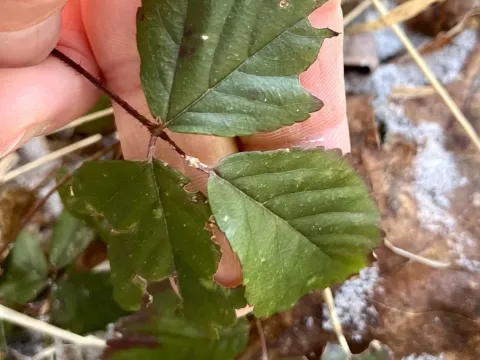
Bristly dewberry
Rubus hispidus
The bristly dewberry (Rubus hispidus) is a member of the Rosaceae family, native to the wetlands and moist woodlands of eastern North America. This trailing subshrub is highly valued for its ability to adapt to environments that are often too damp for other commercial blackberry varieties.
What the section contains
Bristly dewberry
Agronomically, the crop requires acidic, well-drained but consistently moist organic soils. It thrives in partial shade, making it a suitable candidate for intercropping in orchard alleys or areas where full sun exposure is limited by larger canopy trees.
Botanically, it is characterized by its prostrate stems covered in fine bristles rather than harsh thorns. Its leaves are often semi-evergreen, providing ground cover throughout most of the year, which serves as a natural form of weed suppression in the garden layout.
The climate requirements involve temperate conditions with a reliable moisture supply during the growing season. While it is hardy in cold winters, the plants benefit from snow cover or light organic mulching to protect the creeping stems from extreme frost desiccation.
In terms of usage, the bristly dewberry is frequently employed in erosion control projects on shaded slopes and as a niche edible landscape plant that offers low-maintenance production in suitable ecological zones.
Pathogen susceptibility in Rubus hispidus is largely dictated by environmental humidity. Botrytis blight is the primary concern, particularly affecting the fruit clusters during late summer if airflow is insufficient within the dense mat of foliage.
Leaf spot diseases are common, which may lead to premature senescence and a decline in vigor if not managed through proper sanitation and thinning of the old, trailing wood.
Common insect pests include the blackberry cane borer, which can damage the stems, and spider mites, which typically thrive during dry spells, causing leaf yellowing and reduced photosynthetic capacity.
Management strategies focus on maintaining spacing between plant colonies and ensuring that the basal area remains clear of excessive organic debris, which often harbors fungal spores and overwintering larvae.
- Systematic pruning of dead or diseased stems in late winter.
- Application of specialized fungicides if infection pressure increases.
- Monitoring for pest activity, especially on the underside of the leaves.