
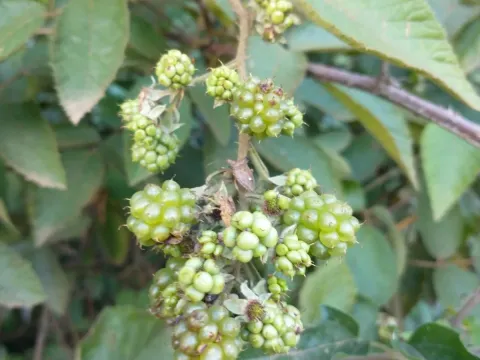
Brazilian blackberry
Rubus brasiliensis
Brazilian blackberry (Rubus brasiliensis) is a perennial shrub belonging to the Rosaceae family. Native to South America, this plant is a wild relative of commercial blackberry varieties, known for its ability to thrive in warm, humid tropical environments.
What the section contains
Brazilian blackberry
Successful cultivation requires well-drained, nutrient-rich soils with a slightly acidic pH. The plant is particularly sensitive to waterlogged conditions, so it is essential to ensure that the site has excellent drainage to prevent root decay and fungal pathogens.
The climate must be consistently warm with high atmospheric humidity. In areas with significant wind exposure, windbreaks are recommended to protect the tender canes from physical damage, which could otherwise reduce plant vigor and fruit production.
Light management is crucial, as the plant performs best in locations that provide plenty of morning light and protection from the harsh afternoon sun. Providing a suitable microclimate is vital for maximizing photosynthesis and fruit quality.
Agrotechnical practices include systematic pruning of old canes to encourage new growth and maintain the health of the plant. Applying organic mulch around the base of the plant helps to conserve moisture and suppress competing weeds effectively.
The yield of Rubus brasiliensis is highly dependent on environmental consistency and the quality of maintenance. Commercial plantations can achieve sustainable productivity levels through proper irrigation management and balanced nutrient application.
Major threats include fungal diseases such as anthracnose and leaf rust, often triggered by excessive humidity. Proper airflow through the canopy is the primary preventive measure against these conditions.
Common pests affecting this species include aphids, spider mites, and various fruit-boring beetles. Integrated pest management strategies, focusing on biological controls, are preferred to maintain the ecological balance of the plantation.
Harvesting is performed by hand to ensure that the fragile berries are not crushed during the process. Since the fruit is highly perishable, it is typically gathered early in the day and processed or stored immediately under cool conditions.