
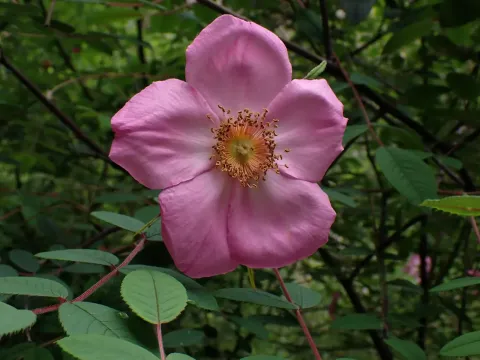
Bristle-footed rose
Rosa setipoda
Rosa setipoda, commonly known as the bristle-footed rose, is a member of the Rosaceae family, originating from the mountainous regions of Central China.
What the section contains
Bristle-footed rose
Propagation is typically performed through seeds, which require stratification for several months to break dormancy and ensure high germination rates.
For best results, seeds should be sown outdoors in late autumn, allowing them to experience winter cold, which triggers the natural germination process in spring.
Vegetative propagation via cuttings is also an effective method, requiring a well-draining rooting medium and stable environmental conditions.
Young plants require consistent monitoring and adequate spacing of at least 1.5–2 meters between individual bushes to allow for optimal crown development.
This species thrives in sunny, open locations, although it can tolerate partial shade during the intense heat of the afternoon in warmer regions.
It prefers fertile, well-drained loamy soils with a neutral or slightly acidic pH, which provide the necessary nutrients for robust growth.
Rosa setipoda is noted for its high cold hardiness, making it a reliable choice for gardens in temperate climates where other rose species might struggle.
Regular irrigation is essential during the active growing season, especially in dry weather, to promote strong shoot development and fruit production.
Annual fertilization with organic matter or balanced mineral fertilizers in spring helps sustain the plant's health and visual appeal throughout the summer.
The main pathological threats include fungal infections such as powdery mildew and black spot, which often occur in humid and stagnant environments.
Common pests include aphids and rose sawflies, which feed on foliage and young shoots, potentially affecting the plant's vigor and bloom quality.
Implementing proper pruning techniques to increase airflow within the plant's canopy is a highly effective way to prevent the spread of fungal diseases.
Pest management should involve regular scouting and the application of appropriate biological or chemical controls only when thresholds are exceeded.
Maintaining a clean garden area by removing fallen leaves and weeds reduces the availability of hosts for common rose pathogens.
The fruit of Rosa setipoda is valued for its nutritional profile and aesthetic appeal, often harvested for culinary or decorative purposes in late autumn.
Harvesting is performed when the hips reach full maturity, exhibiting a deep red color and firm texture, indicating optimal ripeness.
Once harvested, the fruit should be dried in a well-ventilated area away from direct sunlight to preserve its bioactive compounds and characteristic color.
Maintenance pruning, intended to manage the shape and size of the bush, is typically carried out after the harvest period concludes.
Stored raw materials should be kept in breathable containers in a cool, dry environment to prevent moisture buildup and potential spoilage.