
Bramble rose
Rosa rubus
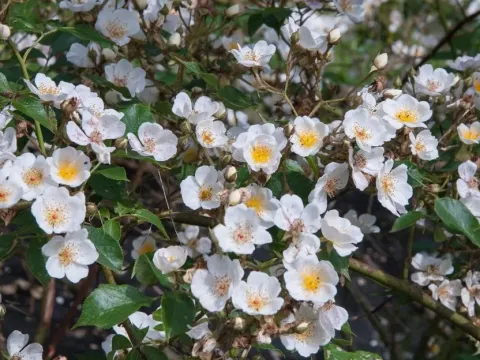
Rosa rubus, commonly referred to as the bramble rose, is a vigorous climbing shrub belonging to the Rosaceae family. Native to the mountainous regions of Central and Western China, this species is highly valued for its exceptional growth habit and prolific clusters of fragrant white flowers.
What the section contains
Bramble rose
Botanically, the plant is distinguished by its long, arching stems that can reach impressive lengths of several meters, making it an ideal candidate for covering large garden structures. The foliage is typically composed of five to seven leaflets, which provide a lush, dark green backdrop to the abundant blossoms.
To thrive, this rose requires a location with full sun to partial shade and fertile, well-draining soil. It performs best in nutrient-rich loams that retain moisture without becoming waterlogged. Consistent watering is particularly critical during the initial establishment period and the peak growing season.
Climate requirements for Rosa rubus include protection from extreme temperature fluctuations. While it is robust, it benefits from sheltered positions in colder zones to prevent winter kill on its extensive lateral shoots. Proper spacing is essential to allow for good airflow and easier maintenance access.
In landscape usage, it is frequently employed in woodland gardens or as a specimen plant to climb against trellises and pergolas. Its ability to integrate into naturalistic designs while maintaining a strong ornamental appeal makes it a staple for gardeners interested in large-scale climbing species.
The primary threats to Rosa rubus health involve pathogens such as powdery mildew and black spot, which often proliferate in environments with poor ventilation or high atmospheric humidity. Managing these diseases involves regular pruning to ensure the internal canopy remains open and airy.
Common garden pests, specifically aphids and spider mites, may infest new growth during hot, dry spells. Effective management strategies include maintaining good plant vigor through adequate fertilization and, if necessary, the application of horticultural oils or approved insecticidal soaps.