
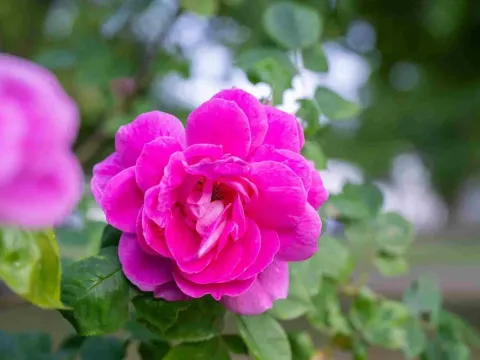
Bourbon rose
Rosa bourbon
The Bourbon rose (Rosa bourbon) belongs to the Rosaceae family. It originated in the early 19th century on the island of Reunion, then known as Île Bourbon, as a spontaneous cross between the China rose (Rosa chinensis) and the Damask rose (Rosa damascena).
What the section contains
Bourbon rose
This crop thrives in sunny locations with well-drained, fertile soil rich in organic matter. Proper air circulation is essential for the Bourbon rose, as it helps maintain the health of the foliage and prevents the accumulation of moisture within the dense shrub structure.
Regarding climate, these roses require a moderate temperate environment. While they are relatively hardy, they benefit from winter protection in colder zones to prevent dieback of the canes, which are known for their distinctively lush, double-flowered growth.
Cultivation practices involve regular pruning in late winter or early spring to remove dead wood and encourage vigorous new growth. Balanced irrigation and periodic fertilization with macro- and micronutrients are necessary to support repeat flowering throughout the season.
The Bourbon rose is primarily used in ornamental horticulture for landscape design and fragrant garden displays. Its historical significance, combined with its remontant blooming habit and intense scent, makes it a premium choice for heritage gardens and professional landscaping.
Common botanical threats include fungal diseases such as powdery mildew and black spot. These pathogens are most prevalent in humid climates with insufficient sunlight, making proper spacing between plants a crucial cultural control method.
Typical insect pests affecting this group include aphids, spider mites, and leaf-rolling sawflies. Managing these threats requires routine scouting and the application of appropriate pest management strategies during the active growing season.