
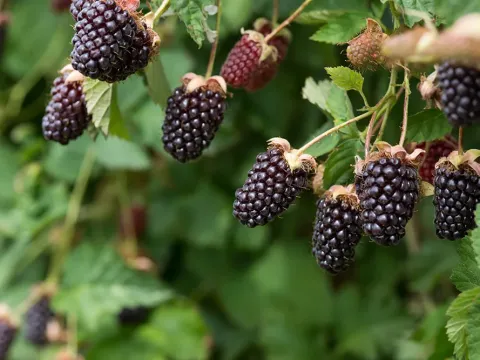
Boysenberry
Rubus boysenberry
The boysenberry (Rubus boysenberry) is a unique crossbreed derived from the blackberry, raspberry, and loganberry. Belonging to the Rosaceae family, this sprawling plant requires structural support such as trellises to manage its long, vigorous canes and maximize fruit production.
What the section contains
Boysenberry
Optimal growth is achieved in deep, well-drained loamy soils rich in organic matter. A soil pH between 5.5 and 6.5 is ideal to ensure the plant efficiently absorbs essential nutrients, preventing issues like chlorosis that can occur in improper soil environments.
Boysenberries thrive in temperate climates with plenty of sunlight and protection from heavy winds. While they can tolerate varied conditions, they perform best in regions with mild winters, as extreme cold can jeopardize the health of the perennial canes and reduce the following year's yield.
Agrotechnical management focuses on precise irrigation and fertilization schedules. Consistent soil moisture is vital during the fruit-set and development phases, while efficient drainage prevents waterlogging, which is a common cause of crown rot in this berry species.
Economically, boysenberries are highly prized for their deep purple color, intense flavor, and high nutritional content. They are widely used in the production of jams, preserves, pie fillings, and gourmet juices, serving as a versatile crop for both commercial and home gardens.
The crop is susceptible to several fungal diseases, most notably anthracnose and botrytis blight. Proper sanitation, including the removal of old canes after harvest and ensuring good air circulation between rows, is critical for disease suppression in commercial plantings.
Pests such as spider mites, aphids, and various cane borers often challenge the cultivation process. Integrated pest management (IPM) strategies, which prioritize beneficial insects and targeted treatments, are recommended to maintain plant vigor throughout the growing season.