
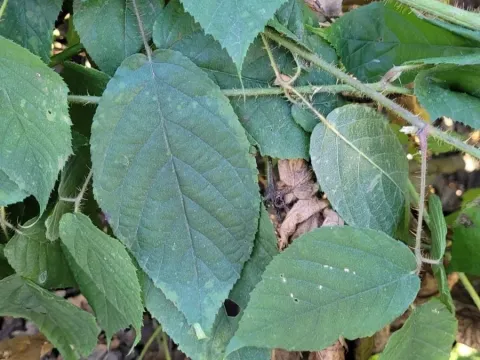
Bristly blackberry
Rubus hirtus
The bristly blackberry (Rubus hirtus) belongs to the Rosaceae family. It is a perennial shrub that serves as an interesting subject for botanical study and a potential genetic source for breeding commercial blackberry varieties.
What the section contains
Bristly blackberry
Originating from Central and Southeastern Europe, this plant is primarily found in deciduous forest habitats. It occupies niches such as woodland margins and thickets, thriving in conditions with filtered sunlight and stable humidity.
The plant requires well-drained, humus-rich soils with a slightly acidic to neutral pH level. It performs best in areas where the organic matter content is high, mimicking its natural forest floor environment.
Regarding climate, Rubus hirtus prefers temperate regions with reliable rainfall throughout the growing season. It exhibits significant resilience to cold temperatures, making it a robust species for northern climates.
Agricultural management involves careful canopy maintenance. Because of the dense bristles and thorns on its stems, manual harvesting and pruning operations should be performed using heavy-duty protective gear to avoid skin irritation.
Fungal diseases are a primary concern for the bristly blackberry. Rust, identified by orange pustules on the underside of leaves, can rapidly spread and damage the foliage if not treated with appropriate fungicides.
Anthracnose can cause severe stem lesions, weakening the plant structure over time. Preventive measures include ensuring good air circulation by thinning the canes each season to reduce moisture retention.
The blackberry mite and raspberry aphid are among the most common pests. These insects can cause stunted growth and berry deformation, significantly reducing both yield and the market quality of the fruit.
Crown gall is a soil-borne bacterial disease that can affect the root system, causing tumor-like growths. Once infected, plants must be removed and destroyed to prevent the spread to healthy sections of the field.
- Implementing a systematic pruning schedule to remove old wood.
- Applying dormant oil sprays to manage overwintering insect eggs.
- Monitoring irrigation systems to prevent overhead watering, which promotes fungal growth.