
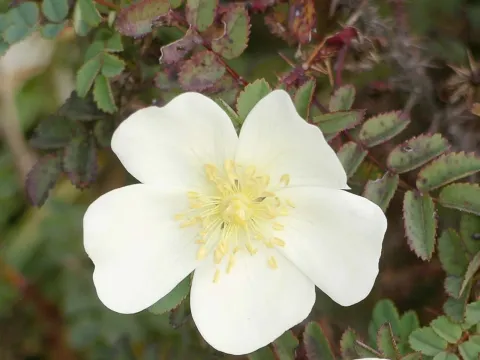
Burnet rose
Rosa spinosissima
Planting the Burnet rose (Rosa spinosissima) is best performed using nursery-grown bushes, ideally in the autumn weeks before the ground freezes or in early spring.
What the section contains
Burnet rose
For seed propagation, sowing should take place in late autumn to allow the seeds to undergo the natural cold stratification process required for successful germination.
This species thrives in sunny locations; full sun exposure is critical for the plant to develop a dense structure and maximize its flowering potential throughout the season.
Planting density should be managed by leaving about 1.5 to 2 meters between individual bushes, which allows for proper airflow and root space for healthy expansion.
When preparing the site, enriching the soil with organic matter and compost helps improve the initial establishment and provides essential nutrients for early growth.
As a member of the Rosaceae family, the Burnet rose is known for its extreme hardiness and ability to adapt to a wide range of harsh environmental conditions.
It prefers well-drained sandy or loamy soils and is generally intolerant of waterlogged areas, which can lead to root rot and other physiological issues.
Maintenance includes managing the plant's natural tendency to produce suckers, which can cause the shrub to become overcrowded if not selectively removed.
While relatively drought-tolerant once established, regular irrigation during the fruit-set phase is highly recommended to improve overall yield and berry quality.
Annual pruning is essential for maintaining plant health; removing dead or diseased wood stimulates new growth and keeps the shrub productive for many years.
The Burnet rose is cultivated primarily for its vitamin-rich hips, which are utilized in both the medicinal and food industries for health supplements and tea blends.
High yields depend on consistent care, including soil fertility management and protection from environmental stress during the peak growing months of the year.
The berries are known for their high content of Vitamin C and antioxidants, making them a valuable crop for producers focusing on functional food ingredients.
Beyond agricultural production, the shrub serves an aesthetic role in landscaping, offering a beautiful floral display during its active blooming period.
With proper management, a well-tended plantation can remain highly productive, consistently yielding high-quality berries for commercial or personal processing.
Common issues include powdery mildew and rust, which often manifest in high humidity environments if there is insufficient ventilation between the bushes.
Pests such as aphids and leaf rollers may target the tender new growth, potentially weakening the plant and impacting its overall vigor and fruit production.
Proactive monitoring and the removal of infected foliage are the first lines of defense, supplemented by targeted fungicide applications when necessary.
Integrated pest management strategies are advised to keep the crop healthy while minimizing the use of synthetic chemicals in the field environment.
Ensuring proper spacing and sanitary pruning are the most effective cultural practices to prevent the spread of diseases within the rose plantation.
Harvesting is performed by hand once the hips have reached full maturity, characterized by a firm texture and a deep, intense color typical of the species.
Due to the numerous sharp thorns on the stems, harvesters must wear heavy-duty protective gloves to avoid injuries during the collection of the fruit crop.
It is vital to harvest during dry conditions; moisture on the surface of the fruit during storage can lead to rapid decay and a loss of nutritional value.
Post-harvest handling should involve prompt cleaning and drying to stabilize the berries, which preserves their long-term shelf life and active compounds.
Properly dried hips should be kept in a dark, dry, and well-ventilated location to ensure they maintain their pharmaceutical-grade quality for the intended use.