
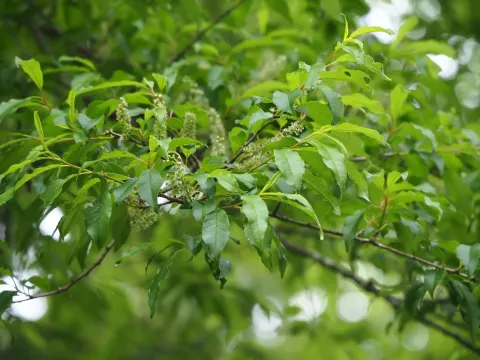
Buerger's bird cherry
Prunus buergeriana
Buerger's bird cherry (Prunus buergeriana) is a deciduous tree belonging to the Rosaceae family. Its native range encompasses the temperate forests of East Asia, specifically Japan, the Korean Peninsula, and Eastern China.
What the section contains
Buerger's bird cherry
The tree thrives in fertile, well-drained loamy soils. It is essential to ensure that the site has optimal drainage, as this species is intolerant of waterlogged soil conditions which can lead to root rot.
Climatically, it requires temperate conditions with sufficient rainfall during the growing season. It is recognized for its winter hardiness, allowing it to adapt to various continental climates without needing winter protection.
Botanically, it is distinguished by its elliptical, serrated leaves and small white flowers arranged in dense racemes. The plant grows as a medium-sized tree, often reaching a height of 10 to 15 meters at maturity.
In terms of agricultural and horticultural use, this species is primarily cultivated for ornamental purposes. It is widely employed in landscape architecture to provide structural form, spring flowering, and seasonal color transitions.
Common fungal diseases include leaf spot, which often occurs during periods of prolonged high humidity and poor air circulation within the tree canopy.
Aphids represent a primary pest threat, frequently colonizing tender new growth and causing curling leaves, which can stunt the overall development of younger trees.
Defoliating insects, such as certain species of moth larvae and sawflies, pose a significant risk to the foliage, especially during mid-summer peak activity.
Powdery mildew is another recurring issue, characterized by a white powdery layer on leaves, which usually intensifies in late summer during dry and warm spells.
Management strategies involve regular monitoring, pruning dead or diseased wood to improve ventilation, and the application of integrated pest management (IPM) practices.