
Bulgarian lady's mantle
Alchemilla bulgarica
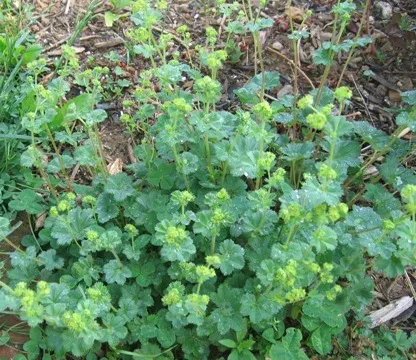
Description
Growing requirements
Bulgarian lady's mantle (Alchemilla bulgarica) is a perennial herbaceous plant belonging to the Rosaceae family. It is native to the Balkan mountain regions, where it thrives in cool, subalpine meadows and woodland edges.
The plant is defined by its distinct basal rosette of scalloped, kidney-shaped leaves. These leaves are covered with fine hairs, which often hold dew drops, creating a unique aesthetic and protective feature for the plant.
Cultivation requires fertile, moisture-retentive, and well-drained soil. While it is highly hardy, it prefers partial shade during the peak of summer to prevent leaf scorching and excessive transpiration.
Standard agronomic practices include consistent watering and occasional fertilization with compost to support steady leaf growth. The plant is versatile and can grow in various soil types as long as the pH remains near neutral.
Commercially, it is valued for its astringent properties, containing high concentrations of tannins and salicylic acid. It is commonly harvested for the production of herbal teas, skincare formulations, and natural extracts.
Main diseases and pests
Powdery mildew is the most common fungal disease, typically occurring during periods of high humidity and poor air circulation. Proper spacing between rows is essential to ensure adequate airflow and reduce fungal pressure.
Slugs and snails can cause significant damage to young foliage during wet springs. Implementing physical barriers or organic bait traps is often sufficient to control these pests in smaller farming plots.
Aphids occasionally colonize the undersides of leaves or tender inflorescences. Monitoring the crop early in the season is vital to prevent rapid population growth and subsequent physiological stress to the plant.
Root rot remains a major threat in soils with poor drainage. If water accumulates around the base of the plant, pathogens can easily invade the root system, causing yellowing and eventual plant death.
Sanitation practices, including the removal of dead foliage at the end of the season, significantly reduce the overwintering potential of pathogens. A clean planting environment is crucial for maintaining high-quality medicinal yields.