
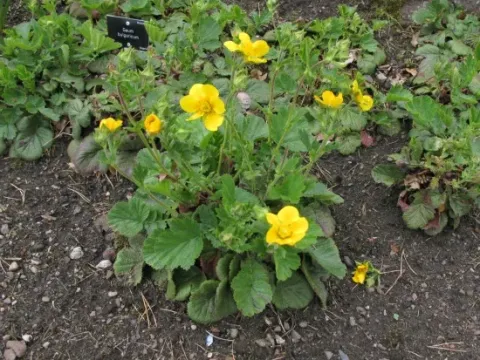
Bulgarian avens
Geum bulgaricum
Bulgarian avens (Geum bulgaricum) belongs to the Rosaceae family. This perennial herb originates from the subalpine regions of the Balkan Peninsula, where it typically thrives in moist meadow habitats and rocky mountain slopes.
What the section contains
Bulgarian avens
The plant requires a cool, moist climate to flourish. In cultivation, it performs best in soils that are rich in organic matter, fertile, and provide excellent drainage to prevent the accumulation of excess water around the crown.
Light requirements for this species are specific; it prefers locations with partial shade, especially during the hottest parts of the day. Direct, intense sunlight can lead to leaf scorching and reduce the overall vigor of the perennial.
Botanically, Geum bulgaricum is characterized by a basal rosette of leaves and striking yellow flowers. Its hardy rhizome system allows the plant to tolerate freezing temperatures during winter dormancy, making it a reliable choice for temperate garden climates.
Economically, the plant is primarily utilized in horticulture for rock gardens and naturalistic landscape designs. Its unique aesthetic and rarity make it a prized specimen for botanical collectors and landscaping professionals alike.
The most significant threat to Bulgarian avens is root rot, which typically develops in heavy or waterlogged soils. Ensuring a proper drainage system is the most effective cultural practice to mitigate this risk.
Powdery mildew is a common fungal issue that can affect the foliage during periods of high humidity and poor air circulation. Proper spacing between individual plants is essential to maintain healthy airflow and minimize infection spread.
Aphids and various leaf-eating beetles can pose a risk during the spring growth phase. Integrated pest management strategies, including regular scouting and biological control, are recommended to maintain plant health without relying on harsh chemicals.
Nematode infestations can lead to stunted growth and root damage. It is crucial to source planting material from reliable nurseries and ensure the soil is free from soil-borne pathogens before establishment.
Routine maintenance, such as removing senescent leaves and debris, plays a vital role in preventing the overwintering of pathogens and pests. Keeping the plant area clean significantly reduces the incidence of common garden diseases.