
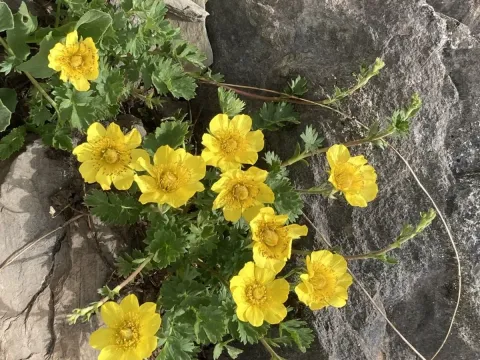
Creeping Avens
Geum reptans
Creeping Avens (Geum reptans) is a perennial herbaceous plant belonging to the Rose family (Rosaceae). It is a classic alpine species naturally adapted to high-altitude regions in the European mountains, where it thrives on rocky slopes and mountain ridges.
What the section contains
Creeping Avens
Botanically, the plant is distinguished by its creeping stolons that allow it to spread across the ground, forming dense mats. The leaves are arranged in basal rosettes, which helps the plant stay close to the ground, minimizing exposure to harsh alpine winds.
Environmental requirements for Geum reptans are specific, as it thrives in cool, moist, and well-lit conditions. It does not tolerate prolonged summer heat well and requires a location where it can remain cool while receiving ample sunlight.
The soil should be well-drained, gritty, or rocky, mimicking the scree slopes of its native habitat. It is essential to avoid heavy, water-logged soils, as this species is prone to root rot if moisture levels are not carefully managed.
In terms of хозяйственное (economic) use, Geum reptans is valued in horticulture as a specialized ground cover for rock gardens and alpine installations. Its ability to stabilize loose soil makes it a practical choice for difficult sloped landscape designs.
The most significant threats to Creeping Avens are root diseases caused by poor drainage and excessive moisture. To mitigate this risk, gardeners must ensure a robust drainage system is present, especially when planting in container gardens or raised beds.
Pests such as spider mites or aphids may appear during hot, dry weather conditions. Regular monitoring of the foliage is recommended to catch infestations early, and gentle water sprays or targeted treatments can effectively manage these populations.
Fungal infections can occur if the plant is overcrowded or lacks proper ventilation. Maintaining adequate spacing between individual plants is necessary to keep the foliage dry and reduce the likelihood of powdery mildew and other pathogenic outbreaks.
Weed competition is a constant threat to this low-growing species. Invasive species can quickly overgrow the plant, blocking the sunlight it needs to survive, so keeping the planting area free of debris and invasive weeds is critical for its health.
Proactive care remains the best defense against pests and diseases. By selecting the correct exposure, ensuring soil porosity, and providing consistent but moderate water, growers can maintain a healthy stand of Geum reptans for many years.