
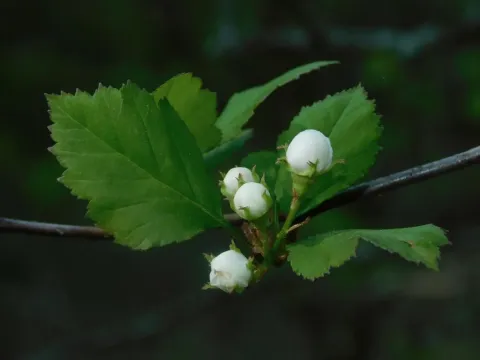
Crataegus intricata
Crataegus intricata
Crataegus intricata, belonging to the Rosaceae family, is primarily propagated through generative methods. Seeds should be sown in the autumn into open ground, as they require a long stratification period ranging from 5 to 7 months.
What the section contains
Crataegus intricata
To improve germination rates, seeds can be scarified or soaked in growth stimulants before planting. The seeds are sown at a depth of 1–2 centimeters into well-prepared, loose soil.
For vegetative propagation, root suckers or cuttings are used. Cuttings are taken during the summer, utilizing semi-hardwood shoots which are rooted in greenhouses with high atmospheric humidity.
Transplanting seedlings to their permanent location is recommended in early spring or late autumn. A spacing of at least 2–3 meters between shrubs is necessary to provide enough room for crown development.
When planting, organic fertilizers such as compost or manure are added to the pits, which promotes the successful establishment of the root system in its new environment.
This plant is native to North America, where it thrives in diverse conditions, including forest edges and dry rocky slopes. It exhibits high frost resistance and adaptability to temperate climates.
The crop does not have strict soil requirements but prefers fertile, well-drained loams with a neutral or slightly alkaline pH. Waterlogging in the root zone must be strictly avoided.
A sunny location is essential for the full development of the crown and abundant flowering. In shaded areas, ornamental qualities decline, and shoot growth becomes sparse and weak.
The shrub is drought-tolerant, although it requires regular watering during the first few years after planting. Mature specimens can withstand periods of temporary drought without significant health issues.
Pruning is a crucial agricultural practice. Sanitary and shaping pruning should be performed in early spring before sap flow begins, which helps maintain a compact and healthy crown shape.
Crataegus intricata is primarily valued as an ornamental crop. It forms compact, dense bushes with delicate foliage and vibrant fruit, making it a popular choice in landscape design.
The fruit of the plant is edible, though it possesses a specific flavor profile, leading to its more common use in processed form. Fruit yield depends on the shrub's age and light availability.
The plant serves as an excellent honey plant, attracting bees and other pollinating insects to the garden. The flowering period occurs in late spring, making it a vital component of local biodiversity.
Practical uses include the creation of hedge barriers. Due to the presence of thorns on the shoots, the plant serves as an effective natural barrier to protect property borders.
In traditional medicine and pharmacology, the fruit and flowers may be used in tinctures known for their mild cardiotonic effects, although professional medical advice is recommended.
The main threats to this crop include fungal diseases such as powdery mildew and leaf rust. High humidity and overcrowding of plantings contribute to the rapid development of these infections.
Among pests, hawthorn mites, aphids, and various leaf-chewing insects pose the greatest danger. They can significantly reduce the ornamental value of the plant and hinder its growth.
Disease prevention involves the timely removal of fallen leaves and crown thinning to improve air circulation. Fungicide treatments should be applied at the first sign of infection.
Systemic insecticides are effective for pest control. Regular monitoring of shrub health is essential, especially during the active spring growth period of the shoots.
Proper maintenance, including balanced fertilization and controlled watering, enhances the plant's natural immune system and reduces the risk of widespread disease outbreaks in the garden.