
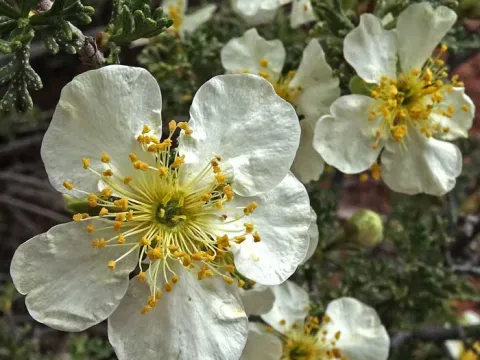
Cowania
Cowania
Cowania is a genus of shrubs in the Rose family (Rosaceae). The most recognized species, Cowania stansburiana, is often referred to as cliffrose, reflecting its natural habitat on rocky cliffs and limestone ridges.
What the section contains
Cowania
This plant is native to the western United States and northern Mexico. It has evolved to thrive in harsh environments, characterized by thin soils, high sun exposure, and significant temperature fluctuations.
To cultivate Cowania successfully, one must prioritize soil porosity. It requires well-drained, alkaline soils to mimic its natural rocky environment. Avoid heavy mulching directly against the base, as this can encourage rot.
Climate adaptability is the hallmark of this culture. It is exceptionally drought-tolerant once established and can survive long periods of water scarcity, making it an excellent candidate for xeriscaping.
Beyond aesthetics, Cowania serves a vital role in ecological restoration. Its ability to anchor soil on steep slopes makes it a preferred choice for rehabilitating disturbed lands and maintaining landscape integrity.
The primary threat to the health of Cowania is root rot caused by stagnant water. Ensuring the soil drains rapidly after rainfall is the most effective way to prevent this lethal condition.
Pests such as aphids and spider mites may target the foliage during hot, dry spells. Monitoring the underside of leaves and branch tips is necessary for early detection and control.
Powdery mildew may occur if plants are spaced too closely, hindering airflow. Adequate spacing during the initial planting phase is critical for maintaining overall plant vigor.
Environmental stress, such as unseasonal frost occurring while the plant is actively growing, can occasionally weaken the stems. Pruning damaged sections in early spring promotes healthier new growth.
Deer and other wild herbivores may graze on young plants. While mature specimens are generally resilient, providing temporary physical barriers during the establishment phase is often recommended.