
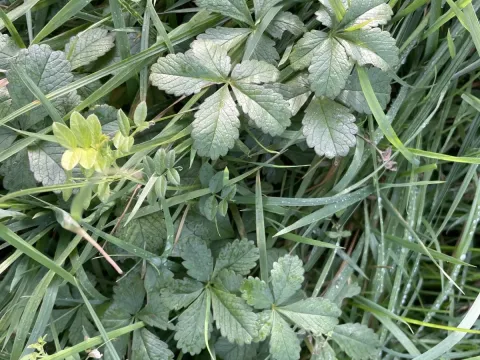
Creeping cinquefoil
Potentilla reptans
Creeping cinquefoil (Potentilla reptans) is a perennial herbaceous plant belonging to the Rosaceae family. It is widely recognized as a resilient weed species that thrives in various habitats, including agricultural fields, meadows, and disturbed lands across temperate regions.
What the section contains
Creeping cinquefoil
The plant is characterized by its prostrate stems that root at the nodes, allowing it to spread vegetatively and form dense mats. This architectural advantage makes it particularly difficult to manage in managed grassland or tillage systems.
This species shows a strong preference for damp, fertile, and heavy soils such as clays and loams. While it is adaptable to different light conditions, it performs best in open areas with sufficient soil moisture throughout the growing season.
Effective agricultural management involves integrated pest management strategies. Tillage practices that involve deep inversion of the soil are necessary to break up the rootstock and disrupt the creeping stems before they establish new colonies.
Beyond its reputation as a weed, Potentilla reptans has historical and medicinal significance. Extracts from the roots and leaves contain tannins and flavonoids, which have been traditionally utilized for their astringent properties in herbal medicine.
The plant is susceptible to powdery mildew, a fungal infection that can significantly reduce leaf efficiency during warm and humid periods. The characteristic white fungal mycelium covers the foliage, inhibiting photosynthesis.
Insect pests, such as weevils, often feed on the leaves and stems. These herbivores can stress the plant, although they are rarely sufficient to eradicate an established population on their own without human intervention.
Rust fungi are another potential threat, causing small pustules on the undersides of the leaves. While this rarely kills the entire plant, it serves as a sign of environmental stress and potential spread to other Rosaceae species.
Environmental monitoring is crucial, as patches of creeping cinquefoil can serve as hosts for various viruses and pathogens that threaten adjacent high-value crops in a farming rotation.
Chemical control remains a common method to manage the spread of this species. Systematic herbicides are usually required to penetrate the extensive root system, as surface contact treatments often fail to kill the plant entirely.