
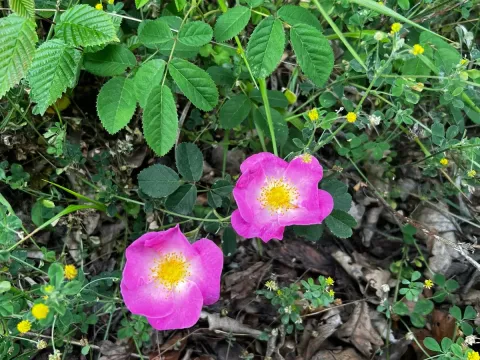
Crimean rose
Rosa tauriae
The planting of the Crimean rose for industrial or private purposes is usually carried out in the autumn, approximately 2–3 weeks before the first hard frosts, allowing the root system to adapt.
What the section contains
Crimean rose
Spring planting of container-grown seedlings is also permitted and should be performed before the active sap flow begins, typically in April, once the soil has warmed to 8–10 degrees Celsius.
For seed propagation, stratification is required in advance, with seeds sown in prepared beds or nursery trays to ensure the production of high-quality planting stock.
The spacing of the bushes must take into account their spreading habit; for full-scale plantations, it is recommended to leave rows 3 to 4 meters wide to ensure easy machine access.
The distance between plants within the row should be at least 1.5–2 meters to prevent canopy overcrowding and ensure effective ventilation, which is critical for preventing fungal diseases.
The Crimean rose belongs to the Rosaceae family and is an endemic species requiring conditions similar to the Mediterranean climate, characterized by high sunlight levels and protection from cold winds.
The crop prefers fertile, well-drained loamy or sandy loam soils with a neutral to slightly alkaline pH, as waterlogging is detrimental to its root system.
The plant demonstrates high drought resistance, yet for the production of commercial-grade fruit, moderate irrigation is necessary during the fruit-set period and active shoot growth.
Agronomic management includes regular application of organic fertilizers, such as rotted manure or compost, which improves soil structure and provides essential micronutrients to the shrubs.
Pruning is an essential maintenance task; sanitary and rejuvenation pruning should be performed in early spring before bud break, removing dead, damaged, and old branches older than 5–6 years.
The yield of the Crimean rose directly depends on the age of the plantation, adherence to agronomic standards, and favorable weather conditions during the shrub's flowering period.
In commercial orchards, active fruiting begins at 3–4 years of age, with maximum productivity levels typically reached by the age of 7–10 years.
A properly formed canopy and timely fertilization allow for a stable yield, which is utilized in the pharmaceutical and food industries for the production of vitamin concentrates.
Harvesting is performed at the stage of full biological maturity, when the rose hips acquire their characteristic bright red or orange-red color and become sufficiently firm.
It is important to note that mechanical harvesting may damage the skin of the fruit, so manual picking with protective gloves is recommended to ensure high-quality raw material.
The most common diseases affecting this species are powdery mildew and leaf rust, which develop rapidly under high humidity and poor air circulation within the shrub canopy.
To control fungal infections, timely fungicide treatments are applied, along with careful pruning to thin out the canopy, thereby preventing the accumulation of excess moisture.
Among pests, leaf rollers, spider mites, and rose aphids pose the greatest threat, potentially significantly reducing the vegetative mass and overall yield of the plant.
Prevention includes early spring spraying with systemic insecticides, as well as keeping the area around the base of the bushes free of weeds, where pests may overwinter.
In case of severe infestations, the use of biological control agents is recommended to ensure the ecological safety of the crop while preserving beneficial entomophages in the field.