
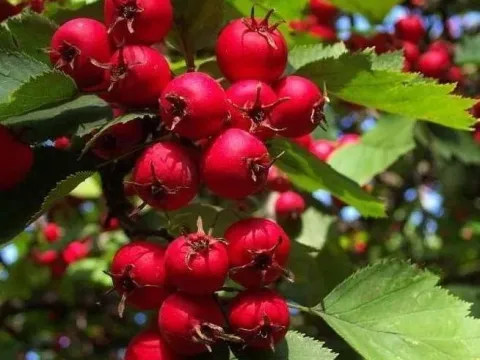
Five-styled hawthorn
Crataegus pentagyna
The reproduction of five-styled hawthorn is primarily carried out through seeds or root suckers. The seeds exhibit deep dormancy, requiring a cold stratification period of 6 to 12 months at low temperatures to ensure successful germination.
What the section contains
Five-styled hawthorn
Seeds are typically sown in the open field during the autumn immediately after harvest. This allows the seeds to undergo the natural cooling cycles necessary to break dormancy. Spring sowing is possible but requires rigorous pre-treatment of the seeds.
When using vegetative propagation, saplings are transplanted into their permanent location in early spring or autumn. A standard planting distance of 3 by 4 meters is recommended for commercial orchards to ensure sufficient light and airflow for every plant.
Planting pits should be prepared with a diameter and depth of 60 cm. Adding organic compost and phosphorus-potassium fertilizers to the soil mix at the base of the pit will provide the necessary nutrients for the plant to establish a strong root system.
After planting, thorough watering is essential along with mulching around the root zone. This practice retains soil moisture and suppresses weed competition during the critical early years of the plant's development.
The five-styled hawthorn is a large deciduous shrub belonging to the Rosaceae family. Native to the Balkans and the Caucasus, it naturally thrives in open forest edges, sunny slopes, and floodplains, preferring well-lit environments.
Light is a critical factor for this culture; excessive shading significantly reduces flower bud formation and overall fruit production. For optimal growth, the plants require maximum exposure to direct sunlight throughout the growing season.
The plant is relatively undemanding regarding soil types but performs best in fertile, well-drained loams. It is intolerant of waterlogged soil, which can lead to root rot; therefore, selecting an area with good natural drainage is highly advisable.
Climate requirements for this species include moderate frost hardiness and high drought tolerance. While it can withstand hot summers, supplementary irrigation is beneficial during the fruiting phase to ensure the quality and size of the berries.
Agrotechnical maintenance must include annual pruning conducted in early spring. This task involves the removal of diseased, dead, or crossing branches to improve the structure of the canopy, enhance light penetration, and facilitate maintenance activities.
The economic value of five-styled hawthorn lies in its fruit and foliage, which are widely used in the pharmaceutical industry for their cardioprotective properties. The berries are rich in flavonoids, pectin, and vitamins.
Commercial harvesting typically begins when the trees reach 5–7 years of age. Productivity increases steadily as the plant matures, with a well-maintained mature shrub capable of producing between 10 and 20 kilograms of fruit per season.
This specific species is characterized by its five-styled flowers, which result in distinct, pectin-rich berries. These properties make the fruit particularly desirable for the production of jams, preserves, and pharmaceutical extracts.
Yield is significantly impacted by the presence of pollinators. Since hawthorns are excellent nectar plants, maintaining healthy populations of bees in the vicinity of the plantation is a key strategy for maximizing fruit set.
Beyond the fruit, young leaves and flowers are harvested during the blossoming period. These parts of the plant are highly valued for their sedative and tonic effects, often incorporated into herbal medicines and specialized supplements.
Common diseases affecting this hawthorn include powdery mildew and rust. These fungal infections are particularly prevalent in humid conditions with poor air circulation, and if left untreated, they can cause significant foliage loss and crop damage.
Preventative measures include the application of systemic fungicides before and after the flowering stage. Such timely interventions are crucial to controlling fungal outbreaks and ensuring the plant remains healthy throughout the year.
Insect pests such as aphids, mites, and the codling moth pose the greatest risks to the crop. These pests damage the new growth and the developing fruit, which can negatively impact the overall commercial value of the harvested berries.
Integrated pest management should be used, combining chemical applications with cultural practices like clearing and burning fallen leaves, where many pests overwinter. This reduces the primary source of infection and pest pressure for the next season.
Regular monitoring of the plantation is vital. Early detection of colonies of scale insects on the trunk and primary branches allows for targeted control measures, which prevents the infestation from spreading across the entire orchard.
The harvest period for five-styled hawthorn occurs when the berries reach full biological maturity, typically during September or October. A deep, saturated red color is the visual indicator that the fruits are ready for collection.
Berries should be gathered by hand or by using secateurs to cut off the clusters. Caution is required during the process due to the thorns typically present on the branches; mechanical assistance helps improve worker safety and efficiency.
Immediate processing is necessary after the harvest. Due to high sugar content and moisture levels, the berries are prone to spoilage if kept fresh for too long, necessitating prompt drying or industrial extraction.
Drying is performed in specialized equipment at temperatures between 50 and 60 degrees Celsius. This ensures the preservation of the bioactive compounds and vitamins that would otherwise degrade at higher heat levels.
Stored in a cool, ventilated area in breathable containers, the dried fruit maintains its medicinal potency and quality for up to two years, meeting the standards required for both food and pharmaceutical sectors.