
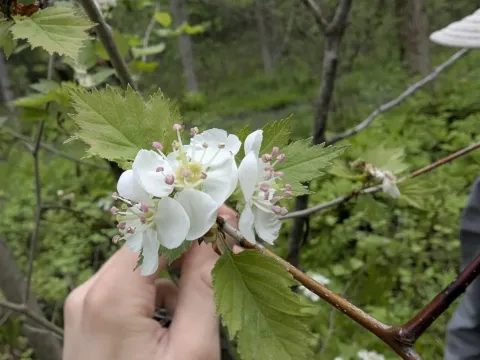
Fanleaf hawthorn
Crataegus flabellata
Fanleaf hawthorn (Crataegus flabellata) is a member of the Rosaceae family, native to North America. It is recognized for its distinctive fan-shaped leaves and bright red fruit, making it a valuable species for ecological and ornamental purposes.
What the section contains
Fanleaf hawthorn
The plant thrives in temperate climates and is highly tolerant of varying soil conditions, ranging from clay to rocky sites. It is sun-loving, requiring at least six hours of direct sunlight daily to ensure abundant flowering and fruiting.
Soil requirements focus on good drainage. While the species can tolerate periodic dryness once established, young plants must be watered consistently to ensure deep root development during the first two years after planting.
Cultural practices include annual pruning to maintain a manageable size and to encourage air circulation through the canopy. Adding a layer of organic mulch helps retain soil moisture and suppresses weeds, which are common competitors for nutrients.
Economically, the fanleaf hawthorn is prized for its edible berries, which can be processed into jams and jellies. Additionally, the plant serves as a vital source of food for local avian populations, contributing to biodiversity on the farm.
Fungal diseases such as powdery mildew and cedar-hawthorn rust represent the most common threats to the species. Proper site selection with good airflow is the first line of defense against these pathogens.
Insect pests, including aphids and hawthorn lace bugs, may occasionally damage foliage. Integrated pest management strategies, such as introducing beneficial predators, are preferred over synthetic chemical treatments.
Fire blight is a significant risk factor, requiring the immediate pruning and destruction of infected branches to prevent the spread of the bacteria to the main structure of the tree.
Regular sanitation measures, including the removal of mummy berries and fallen leaves, are critical to interrupt the life cycle of pests and disease-causing fungi.
For sustainable production, emphasize plant health through appropriate spacing, which prevents overcrowding and reduces the overall risk of disease transmission within the orchard or hedge.