
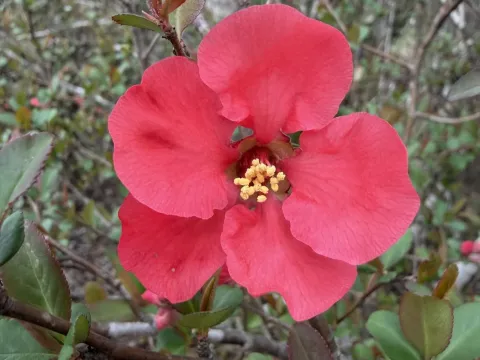
Flowering quince
Chaenomeles
Sowing seeds of Chaenomeles is best performed in late autumn, specifically in October or November, directly into open soil. This allows for natural stratification, which significantly improves the germination rate in the spring.
What the section contains


Flowering quince
If seeds are stored indoors, they must undergo cold stratification in a refrigerator at temperatures between +3 and +5 degrees Celsius for two to three months. Sowing in seed trays with loose substrate can be done in February or March.
For vegetative propagation, young plants should be transplanted to their permanent location in early spring before the buds break or in late autumn. In warmer regions, autumn planting is preferred for better root establishment before summer heat.
Maintain a distance of at least 1 to 1.5 meters between plants to provide sufficient space for their spreading crown and root development. Proper spacing is essential to ensure adequate airflow and sunlight penetration.
When planting as a hedge, spacing can be reduced to 0.5–0.8 meters between bushes, provided that regular pruning is performed to maintain a dense and structured form throughout the growing season.
Chaenomeles is a low-maintenance shrub belonging to the Rosaceae family. It thrives in well-lit areas, as shade reduces blooming density and affects the sugar content and ripening of the fruit.
The culture prefers light loamy or sod-podzolic soils with a neutral or slightly acidic pH. It does not tolerate sites with high groundwater levels or waterlogged soil, as these conditions often lead to root rot.
Despite being winter-hardy, young plants require protection from strong winds and mulching around the root zone with peat or humus in the first few years to prevent soil freezing and moisture loss.
Agronomic practices include applying organic fertilizers every 2–3 years. Throughout the growing season, regular weeding and shallow soil cultivation are necessary, as the plant's surface root system is sensitive to soil compaction.
Pruning is critical for productivity: perform sanitary pruning in early spring to remove dead branches, and shaping pruning after the flowering period to avoid disrupting the formation of new fruit buds.
Chaenomeles starts producing its first harvest 3–4 years after planting. Full productive maturity, where the bush exhibits its best varietal characteristics, usually occurs at 5–7 years of age.
The average yield from a mature bush ranges from 2 to 5 kilograms of fruit, depending on the specific cultivar, local climatic conditions, and the level of agronomic care provided.
The fruits, often called Japanese quince, are highly nutritious. They contain significant amounts of Vitamin C, organic acids, and pectin, making them an excellent raw material for industrial and home processing.
The fruit is used to make jams, candied fruits, preserves, and as a fragrant addition to tea, often serving as a local substitute for lemons due to its high acidity and strong aroma.
Stability of the harvest depends on the presence of pollinating insects during the flowering stage, so planting nearby honey-producing plants is recommended to ensure high fruit set rates.
The main threats to Chaenomeles include fungal diseases such as cercospora, septoria, and powdery mildew, which manifest as leaf spots during periods of high humidity and poor ventilation.
Pests like aphids and scale insects may infest young shoots during early summer, extracting sap and weakening the plant. This requires timely monitoring and application of appropriate insecticides.
Improper watering and poor drainage can lead to root rot. To prevent this, always use certified healthy planting material and ensure that soil moisture is managed effectively during rainy seasons.
Disease management includes mandatory fall sanitation, removing and burning fallen leaves that harbor fungal spores, and applying preventative copper-based fungicide sprays in early spring.
If pest infestation becomes severe, biological control agents are highly recommended to minimize chemical impact on beneficial insects, such as bees, which are essential for pollination.
Harvesting usually takes place in late September or October, before the first significant frosts occur. Fruits should be picked by hand, taking care not to bruise the skin, which preserves quality.
Keep in mind that fresh Chaenomeles fruit is firm and quite acidic, but it possesses an intense aroma that becomes more pronounced during short-term post-harvest storage in a cool place.
Collected fruits can be stored in a refrigerator or a cool cellar at temperatures between +2 and +5 degrees Celsius for up to three months, allowing for a steady supply for winter processing.
Harvesting should ideally be planned for dry, sunny days. Moist fruits are prone to faster decay and mold growth, so it is recommended to process them immediately or dry them in a well-ventilated area.
After harvesting, perform a final inspection of the bushes, remove any damaged growth, and prepare the shrubs for the winter dormant season to ensure long-term plant health and vigor.