
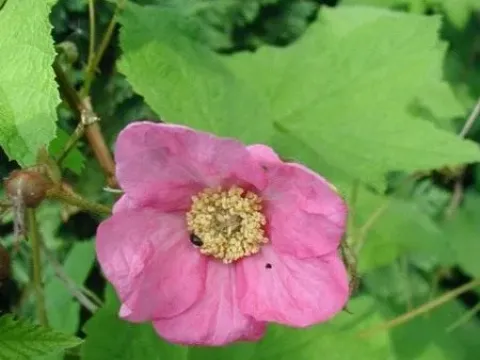
Flowering raspberry
Rubus almus
Flowering raspberry (lat. Rubus odoratus) is a deciduous ornamental shrub belonging to the Rosaceae family. Unlike common blackberry species, this plant is primarily valued for its large, maple-like leaves and fragrant, purple-pink flowers that appear throughout the summer season.
What the section contains
Flowering raspberry
The species originates from North America, specifically inhabiting shaded forests and moist ravines. Due to its robustness and aesthetic appeal, it has been widely introduced to temperate regions of Europe as a reliable landscape plant for shaded areas.
The plant thrives in partial shade, as direct intense sunlight can scorch its delicate foliage. It requires moist, fertile, well-draining soil rich in organic matter, maintaining a neutral or slightly acidic pH level for optimal growth and nutrient uptake.
Hardiness is a key advantage, making it suitable for cold climates without the need for extensive winter protection. However, consistent moisture management is critical; during drought, the shrub must be irrigated to prevent leaf browning and flower drop.
Agronomic maintenance includes annual spring pruning to remove deadwood and maintain a tidy shape. As the species spreads via underground rhizomes, gardeners must manage the root zone to prevent it from becoming overly aggressive in small garden settings.
Flowering raspberry is relatively resistant to major pests but can be prone to powdery mildew in conditions of poor air circulation and high humidity. Proper spacing between individual plants is the most effective preventative measure against this fungal disease.
Aphids may occasionally infest the new growth during the spring. When infestations occur, they can be controlled using soft soaps or horticultural oils to avoid harming beneficial pollinating insects that are attracted to the fragrant flowers.
Anthracnose can occasionally affect the canes if the plantation is too dense or poorly ventilated. Regular cleanup of fallen leaves and debris around the shrub helps to reduce the inoculum load for the next growing season.
Root rot represents the primary risk for this shrub, especially in heavy soils with poor drainage. Establishing a proper drainage layer at the time of planting is essential to ensure the longevity and health of the root system.
With minimal intervention and attention to site selection, the flowering raspberry remains a highly rewarding and low-maintenance ornamental shrub for temperate climate gardeners.