
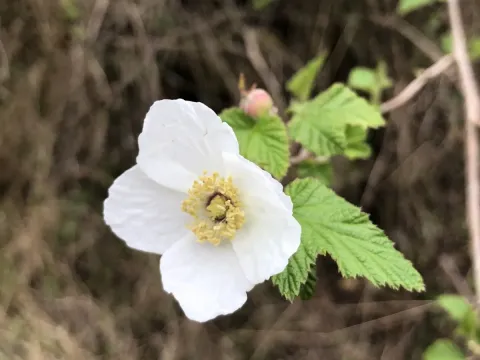
Flowering Raspberry
Rubus trilobus
Flowering Raspberry (Rubus trilobus) belongs to the Rosaceae family. Native to the mountainous regions of Mexico, this plant is primarily cultivated for its exceptional ornamental value rather than its fruit production, standing out due to its large white blossoms.
What the section contains
Flowering Raspberry
For successful cultivation, the plant requires well-draining, humus-rich soil. It thrives in locations with partial shade, especially in warmer climates where direct afternoon sun can cause leaf scorch. Ensuring consistent soil moisture without waterlogging is essential.
Regarding climate, Rubus trilobus prefers temperate environments. It is not fully hardy in extremely cold regions, so providing winter protection or mulching the root zone is a common practice to ensure the shrub survives the dormant period.
Regular fertilization with organic compost or balanced NPK fertilizers is recommended during the early spring to promote vigorous growth. Pruning should be carried out after the flowering phase to maintain the desired shape and plant health.
The cultural use of this species is focused on landscaping. It is frequently employed in woodland gardens, as a specimen shrub, or as a focal point in borders due to its broad, lobed leaves and delicate floral displays.
Like other species within the Rubus genus, this plant is susceptible to various fungal pathogens. Powdery mildew and leaf spot are common issues, especially in humid conditions with poor air circulation, necessitating regular inspections.
Pest pressures primarily include aphids and mites, which can sap the plant's vitality. Early detection through regular monitoring of the underside of leaves is the most effective way to manage these populations before they cause structural damage.
The implementation of an integrated pest management (IPM) strategy, including the use of horticultural oils or insecticidal soaps, is often sufficient to keep pest populations at bay without relying on heavy synthetic pesticides.
Root rot caused by Phytophthora species can occur if the soil drainage is inadequate. Improving the physical structure of the soil with compost and ensuring it does not stay saturated is a critical preventive measure.
Sanitation practices such as removing leaf litter and diseased wood from the garden area will significantly reduce the inoculum load for the upcoming growing season and support plant longevity.