
Low shadbush
Amelanchier humilis
Description
Growing requirements
Low shadbush (Amelanchier humilis) is a deciduous shrub belonging to the Rosaceae family. Native to eastern North America, this species is highly regarded for its hardiness and ability to thrive in various temperate environments.
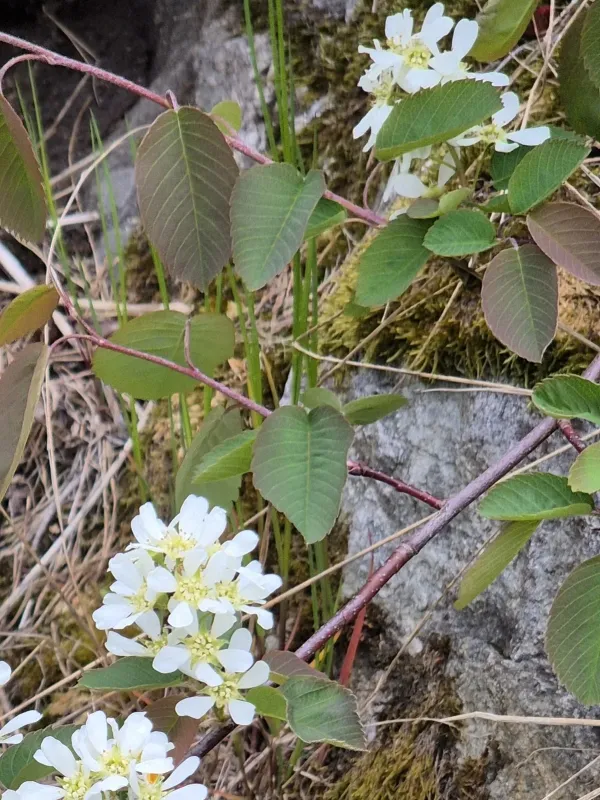
Botanically, it is a low-growing plant, typically ranging from 1 to 1.5 meters in height. It features small, finely toothed leaves and displays beautiful, white, fragrant flowers in spring, followed by dark purple or blackish edible berries.
The shrub demonstrates excellent tolerance to diverse soil types, including rocky or sandy soils, provided there is adequate moisture. It thrives best in well-drained loams and prefers sunny locations to maximize its fruit-bearing potential.
As a resilient horticultural crop, it is exceptionally cold-hardy, making it suitable for cultivation in northern latitudes where other fruit-bearing species might struggle. Its spreading root system helps in stabilizing soil and managing erosion.
The primary economic use of this plant is for its fruits, which are processed into jams, jellies, and desserts due to their unique, sweet flavor. Beyond its agricultural value, it serves as a valuable ornamental plant for landscaping and wildlife habitats.
Main diseases and pests
Like many members of the Rosaceae family, it can be susceptible to fungal issues such as rust and leaf spot. These conditions are often triggered by excessive moisture and poor air circulation, making proper spacing between plants essential.
Insect pests include aphids and leaf-eating beetles, which may appear during the active growth phase. Regular scouting and maintaining overall plant vigor are the most effective ways to minimize impact without heavy chemical intervention.
Harvesting
Harvesting usually takes place in late summer as the berries ripen into deep blue or black colors. Since the fruit does not ripen uniformly, multiple picking sessions are often required to ensure all berries are gathered at peak maturity.
Once harvested, the berries should be handled carefully as they are quite perishable. It is recommended to process or refrigerate the fruit immediately to maintain its nutritional value and fresh flavor for culinary use.