
Schrader's hawthorn
Crataegus schraderiana
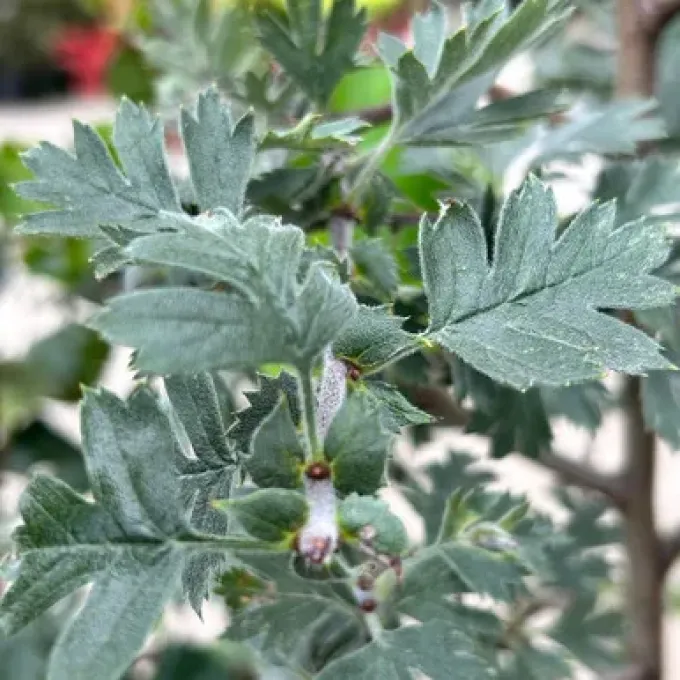
Description
Growing requirements
Schrader's hawthorn (Crataegus schraderiana) is a distinctive member of the Rosaceae family. It is native to the Caucasus and Crimea regions, where it thrives in rocky mountainous terrain and open woodland environments.
The plant demands a sunny exposure for optimal growth and fruit production. It exhibits significant drought tolerance, making it an excellent choice for xeriscaping or regions where irrigation is limited during the hot summer months.
Regarding soil preferences, it is adaptable to various types, provided they are well-drained. It performs best in loam or sandy soils with a neutral pH, though it can withstand slightly alkaline conditions common in its native limestone habitats.
Cold hardiness is a major characteristic of this species, as it is well-adapted to survive freezing winter temperatures. Newly planted specimens benefit from protective mulching around the root zone to stabilize soil moisture and temperature during the first winter.
Agricultural management is relatively simple, focusing on regular pruning to maintain a healthy crown structure. It is recommended to perform structural pruning in early spring before the buds break to ensure high productivity and easy access during harvest.
Main diseases and pests
The species is susceptible to typical hawthorn pests, including aphids and spider mites, which feed on the sap of young leaves. Regular inspection of the foliage is necessary to detect outbreaks early before they cause significant damage.
Fungal diseases like powdery mildew are the primary threat, especially in areas with poor air circulation or high humidity. Maintaining proper spacing and removing dead wood are crucial cultural practices to minimize the risk of infection and preserve plant health.