
Amelanchier hybrids
Amelanchier hybrids
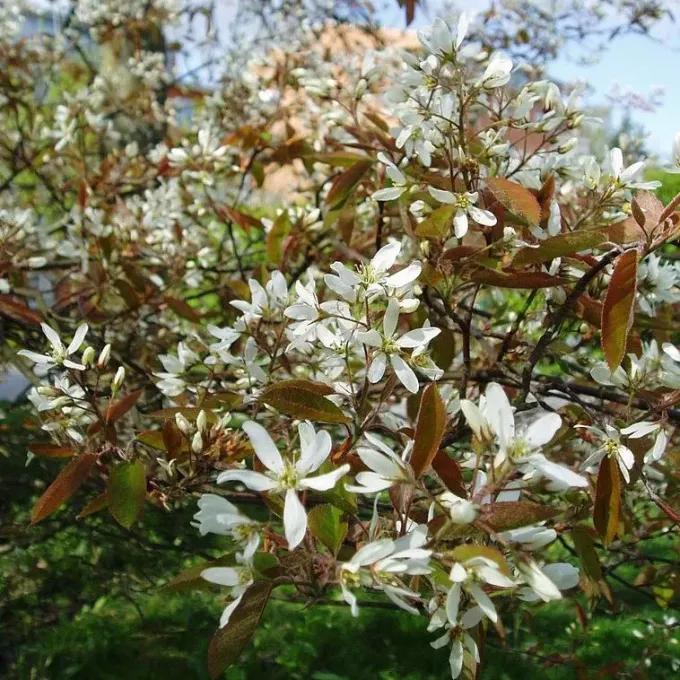
Description
Sowing dates
Planting Amelanchier hybrids is primarily carried out using nursery-grown saplings, as seed propagation often leads to a loss of desirable hybrid characteristics.
The optimal time for planting containerized saplings is from early spring to late autumn, which ensures reliable establishment in the garden.
For bare-root specimens, the best planting times are early spring before bud break or late autumn, several weeks before the ground freezes.
When establishing commercial plantations, it is essential to follow a strategic planting scheme, maintaining at least 2.5–3 meters between plants for optimal light exposure.
The species is known for its high winter hardiness, meaning young plants do not require complex winter protection once established in the open ground.
Growing requirements
Amelanchier hybrids belong to the Rosaceae family and are deciduous shrubs or small trees, developed through natural or artificial cross-pollination.
The plant is undemanding regarding soil composition, yet it performs best in loamy or sandy-loam soils with moderate moisture and a neutral to slightly acidic pH.
The culture is light-loving; significant shade reduces fruit production and berry sweetness, making sunny locations the best choice for planting.
Amelanchier is highly adaptable to various climates, capable of enduring harsh winters and late spring frosts, which ensures stable yields across different regions.
Proper agronomy includes regular pruning to shape the crown and remove older wood, which stimulates the growth of vigorous, productive fruit-bearing branches.
Yield
The fruits of Amelanchier hybrids are blue-black berries covered with a waxy bloom, valued for their high content of vitamins, anthocyanins, and essential micronutrients.
Commercial fruit production typically begins in the 3rd to 4th year of life, with peak yields usually reached between the 7th and 10th years of development.
Economic uses include fresh consumption, production of juices, jams, jellies, and landscape decoration due to its aesthetic qualities.
Because of its ornamental value during both the flowering and fruiting seasons, Amelanchier is increasingly recognized as a valuable crop for organic farming.
Average yields from a mature shrub range from 5 to 10 kilograms, depending on soil quality, cultivation environment, and the level of professional care provided.
Main diseases and pests
Amelanchier hybrids are generally resistant to most common garden diseases, although they may occasionally be affected by powdery mildew in excessively humid conditions.
Primary pests include leaf rollers and sawflies, which, if left unmanaged during mass outbreaks, can damage foliage and reduce the overall health of the shrub.
Birds represent the most significant threat to the harvest during the ripening period, making the use of bird-protection netting highly recommended.
- Preventive fungicide treatment in early spring.
- Prompt removal of dead or diseased wood.
- Sanitary pruning to increase air circulation within the crown.
To prevent the spread of pests, it is crucial to maintain cleanliness in the root zone, including regular mulching and weeding to keep the area clear of debris.
Harvesting
Harvesting Amelanchier berries requires attention, as fruits ripen unevenly, necessitating multiple selective harvests throughout the ripening season.
Optimal ripeness is indicated by a deep dark color and soft texture, and the berries should easily separate from the pedicel without skin damage.
Freshly harvested berries have a short shelf life, so it is recommended to process or freeze them within the first 24 hours after picking.
Manual harvesting is the most efficient method for home gardens, ensuring berry integrity and the absence of foreign material in the final yield.
In commercial operations, mechanized harvesting is possible if the plant architecture has been properly managed and pruned for such equipment.