
Utah serviceberry
Amelanchier utahensis
Description
Growing requirements
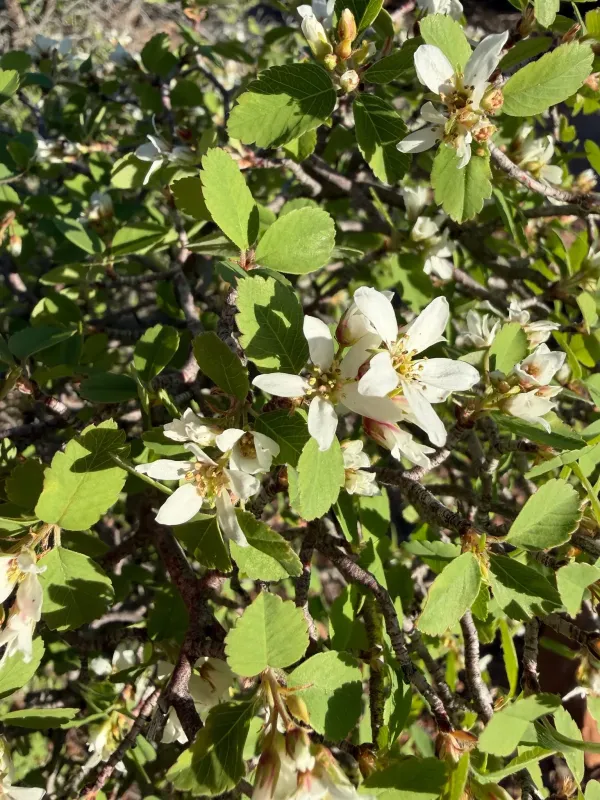
Utah serviceberry (Amelanchier utahensis) belongs to the Rosaceae family. It is a deciduous, long-lived shrub or small tree native to the western regions of North America, typically found in arid mountain foothills and rocky slopes.
This species is exceptionally well-adapted to harsh environmental conditions. It thrives in well-drained, calcareous, or rocky soils and demonstrates superior drought tolerance, making it a valuable crop for regions with limited irrigation resources.
For optimal growth, Amelanchier utahensis requires full sun exposure. It is highly sensitive to waterlogged conditions; therefore, when planting on heavy or clay-based soils, implementing a proper drainage system is essential to prevent root asphyxiation.
Agronomically, this plant requires minimal fertilizer input. Once established, it is remarkably self-sufficient. Young saplings need moderate watering during their first two years to ensure the deep development of the root system.
The plant exhibits high winter hardiness, consistent with its mountainous origins. It does not require winter protection and remains resilient even in areas prone to significant sub-zero temperatures throughout the dormant season.
Yield
The primary economic use of Utah serviceberry is the production of edible, blueberry-like pomes. The yield capacity depends heavily on the plant's maturity, stand density, and local climatic stability during the flowering period.
The berries develop in clusters and ripen over time, allowing for sequential hand-harvesting. These fruits are rich in antioxidants and sugars, making them ideal for both fresh consumption and various industrial food processing applications.
Beyond its culinary value, the shrub is highly prized for its ornamental qualities. Its abundant spring bloom provides aesthetic appeal, which adds value to both private gardens and commercial landscape design projects.
The plant’s vigorous root system is effective in soil stabilization. Farmers often utilize Utah serviceberry in agroforestry systems to prevent soil erosion on sloped agricultural plots or marginal lands.
With correct pruning and management, the plants maintain a productive lifespan spanning several decades. Regular maintenance of the crown density ensures easier harvest logistics and helps in sustaining healthy fruiting cycles.
Main diseases and pests
Utah serviceberry is generally resistant to many common fungal diseases. However, in environments with poor air circulation or high humidity, powdery mildew may occur, necessitating targeted preventive fungicide applications.
The plant can be susceptible to common pests like aphids or leafrollers, which typically target new vegetative growth. Frequent monitoring of the foliage during the spring growing season is recommended for integrated pest management.
- Routine removal of deadwood to eliminate potential disease reservoirs.
- Maintaining weed-free conditions around the plant base to improve airflow.
- Utilization of biological control agents to manage aphid populations.
Avian pests pose a significant threat to the fruit crop during the final stages of maturation. In commercial settings, the use of protective bird netting is often necessary to secure the harvest yield.
Excessive moisture during the dormant period increases the risk of root rot pathogens. Ensuring proper soil aeration is critical to maintaining long-term plant vigor and productivity.