
Gaspé serviceberry
Amelanchier gaspensis
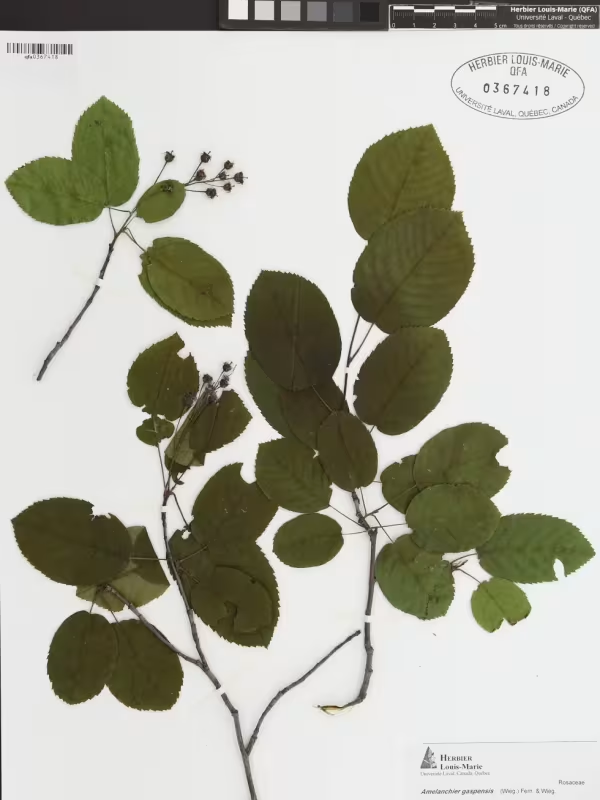
Description
Growing requirements
Gaspé serviceberry (Amelanchier gaspensis) is a distinctive shrub belonging to the Rosaceae family. It is native to the coastal regions of North America, particularly the Gaspé Peninsula, where it thrives in challenging northern climates.
The plant exhibits a multistemmed growth habit, typically forming a dense shrub structure. Its leaves are simple and alternate, while the flowers are characteristically white, providing a significant ornamental value in addition to fruit production.
This species requires well-drained, slightly acidic to neutral soils to perform optimally. It is particularly well-adapted to rocky substrates and demonstrates high resilience to northern environmental stressors.
In terms of climatic preferences, it favors cooler temperate conditions and requires adequate moisture throughout the growing season. While it is hardy, young plants benefit from supplemental irrigation during periods of prolonged drought.
Economically, it is valued as a minor fruit crop suitable for cool-climate orchards. The berries are harvested for fresh consumption, processing into jams, and jellies, or drying for storage.
Main diseases and pests
The Gaspé serviceberry is susceptible to common Rosaceae pathogens, including fire blight and cedar-apple rust. Maintaining spatial distance between host plants is a critical preventive measure.
Pests such as aphids and leaf-eating caterpillars are the most common insects encountered. Scouting throughout the season is recommended to manage populations before they cause significant defoliation.
Avian damage during the berry ripening phase can be substantial, as the fruits are a highly sought-after food source for local bird populations in the region.
Fungal diseases like leaf spot may occur in seasons with high rainfall. Adequate pruning to ensure airflow through the canopy is essential to mitigate these issues.
Integrated pest management strategies focusing on biological control are preferred to maintain the health of the shrub and the quality of the harvested produce.