
Inland serviceberry
Amelanchier interior
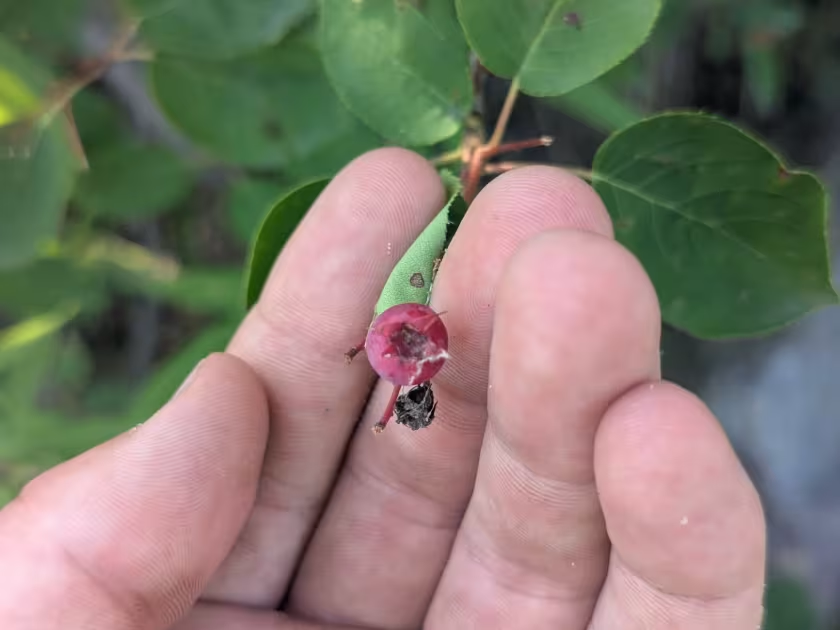
Description
Growing requirements
Inland serviceberry (Amelanchier interior) is a deciduous shrub or small tree belonging to the Rosaceae family. It is native to North America and typically grows in woodland edges and open shrublands.
The species is highly valued for its adaptability, showing excellent winter hardiness and the ability to thrive in various temperate climate conditions.
It prefers full sun to partial shade, although optimal fruit production occurs when the plant receives at least six hours of direct sunlight daily.
Regarding soil requirements, Amelanchier interior grows best in well-drained, fertile, loamy soils with a slightly acidic to neutral pH level.
Beyond its culinary uses, this plant serves as a significant landscape element, often planted for its attractive spring flowers and edible, nutrient-dense fruits.
Main diseases and pests
Common plant diseases affecting serviceberry include powdery mildew and cedar-apple rust, which can impact foliage health during humid seasons.
Pests such as aphids, leafminers, and various species of caterpillars are known to feed on the leaves and can reduce the tree's vigor if untreated.
Birds pose a major challenge for commercial growers, as they are highly attracted to the sweet, ripe berries and can consume a large portion of the crop.
Regular pruning is essential to improve airflow through the canopy, which serves as a primary cultural practice for reducing disease outbreaks.
Integrated pest management strategies are recommended, focusing on early identification and the use of eco-friendly sprays when necessary.
Harvesting
The harvest season for inland serviceberry typically starts in mid-summer, depending on the specific climatic conditions of the growing region.
Fruit maturation is gradual, meaning growers should plan for multiple picking sessions to ensure that all berries are harvested at peak ripeness.
Manual harvesting is the standard method for quality berries, ensuring the delicate skin remains intact for storage or immediate market sale.
Once harvested, the berries should be kept in a cool environment to slow down the metabolic rate and prevent quick degradation of the quality.
Efficient post-harvest handling is critical for industrial cultivation, involving prompt sorting and cooling to extend the shelf life of the fruit.