
Apple serviceberry
Amelanchier grandiflora
Description
Growing requirements
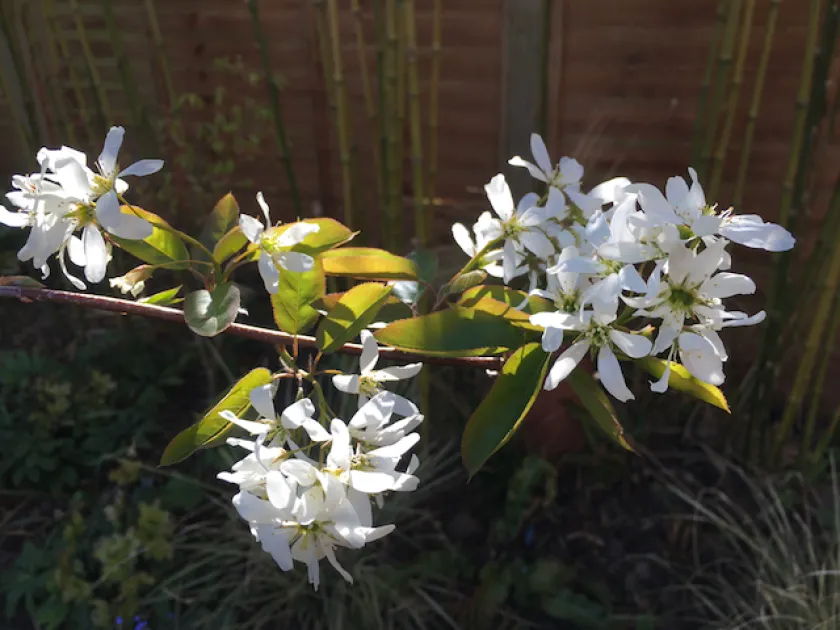
Apple serviceberry (Amelanchier grandiflora) is a sophisticated hybrid shrub belonging to the Rosaceae family. It originated from the cross-breeding of two North American species and is highly valued for its large, showy white blossoms and vibrant autumn foliage, making it a staple in ornamental horticulture.
To ensure vigorous growth, this plant requires a location with full sun to partial shade. It thrives in well-drained, slightly acidic to neutral soils that remain consistently moist but not waterlogged. Proper site selection is critical for maximizing both flower production and fruit development.
Climatic requirements are relatively modest as the species is known for its excellent cold hardiness. It can adapt to various temperate climates, though it prefers regions with distinct seasons. It performs best in areas where soil moisture is managed effectively during the first few years of establishment.
Standard agrotechnical practices for this crop include light pruning after flowering to shape the canopy and maintain vigor. Mulching around the base of the plant is highly recommended to regulate soil temperature and minimize weed competition, as the root system is sensitive to excessive disturbance.
The economic value of this crop spans from ornamental landscaping to small-scale fruit production. The berries, which ripen to a dark purple or black color, are sweet and juicy, finding applications in pies, jams, and jellies, thereby adding functional value to any garden setting.
Main diseases and pests
Major diseases affecting this species include Entomosporium leaf spot and rust, which can impact foliage health during humid summers. Preventive measures include ensuring good air circulation within the canopy and removing any fallen leaves to reduce fungal inoculum levels.
Insect pests such as sawflies, aphids, and mites can occasionally target the tree's foliage. Integrated pest management, focusing on early detection and the use of horticultural oils or soaps, is effective in maintaining plant health without disrupting beneficial insect populations.