
Fernald's serviceberry
Amelanchier fernaldii
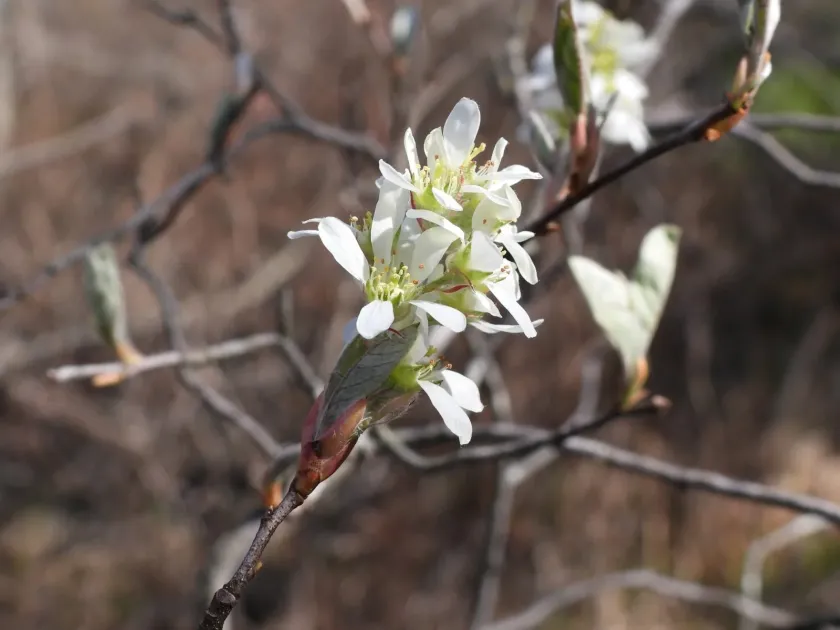
Description
Growing requirements
Fernald's serviceberry (Amelanchier fernaldii) is a deciduous shrub belonging to the Rosaceae family. This species is native to North America and is highly valued for its edible berries and excellent aesthetic appeal throughout the growing season.
The plant thrives in well-drained, acidic to neutral soils. It exhibits great versatility, successfully adapting to various landscape conditions, provided it receives sufficient sunlight, which is crucial for fruit production and autumn color development.
This species is exceptionally cold-hardy, making it a reliable choice for regions with long, harsh winters. It establishes deep root systems that help the shrub endure temporary dry spells, although consistent soil moisture is preferred during the fruit setting stage.
Cultivation requires minimal maintenance, though annual pruning is recommended to remove dead or overcrowded branches. This encourages better light penetration and air circulation, promoting healthier plant growth and larger berry yields in subsequent seasons.
Beyond its culinary utility, Fernald's serviceberry is widely used in permaculture and landscaping. Its flowers provide early spring nectar for pollinators, while the fruit serves as a vital food source for local wildlife, supporting ecological biodiversity.
Main diseases and pests
The main threats to the plant include fungal diseases such as leaf blight and rust, which often occur in humid, stagnant environments. Promoting airflow through proper spacing is the best preventive strategy against these infections.
Pests that may impact the shrub include aphids, spider mites, and scale insects. Integrated pest management, focusing on early identification and targeted removal of infested branches, is usually sufficient to maintain plant health without heavy chemical use.
Harvesting
The berries typically reach maturity in late summer. They are ready to harvest when they turn a deep, dark purple or blue color and become slightly soft to the touch, indicating high sugar content and optimal flavor.
Harvesting is best done by picking individual clusters as they ripen. Since the fruit is highly perishable, immediate processing into jams, jellies, or freezing is recommended to preserve the nutritional value and fresh taste.