
Asian serviceberry
Amelanchier asiatica
Description
Growing requirements
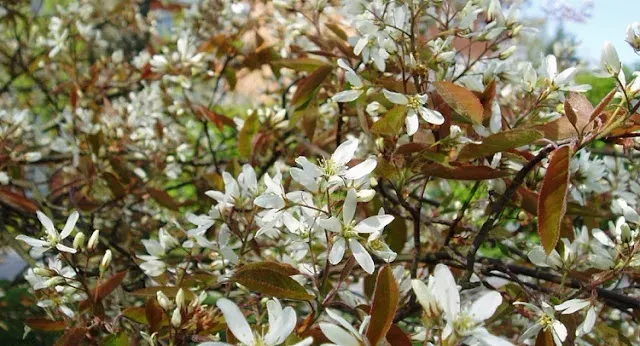
The Asian serviceberry (Amelanchier asiatica) is a deciduous shrub or small tree belonging to the Rosaceae family. It is valued for its early spring flowering and its edible berries, which have been consumed in East Asian cultures for centuries due to their unique flavor and nutritional profile.
Native to Japan, Korea, and China, this species thrives in temperate zones. It requires a location with full sun to partial shade and prefers well-drained, slightly acidic to neutral soil. The plant is noted for its high environmental adaptability and cold hardiness, making it suitable for a wide range of climates.
Proper cultivation includes maintaining a consistent moisture level in the soil, particularly during the fruit development stage. Young plants benefit from deep watering, while mature specimens demonstrate a reasonable level of drought tolerance. Mulching is highly recommended to protect the root system from temperature fluctuations.
Pruning is essential for maintaining the health and productivity of the plant. It should be performed during the dormant season to remove dead wood and encourage the growth of fruiting branches. Thinning the canopy improves airflow, which is critical for reducing the risk of fungal outbreaks.
The culinary utility of Amelanchier asiatica is significant, as the berries are rich in antioxidants. Beyond its fruit, the species is frequently utilized in landscape design as a specimen tree or in border plantings due to its stunning seasonal changes, including vibrant autumn foliage colors.
Main diseases and pests
Asian serviceberry is susceptible to several common diseases, including leaf spot and fire blight, which are typical for the Rosaceae family. Managing these conditions requires proper sanitation, such as removing affected branches immediately upon detection and keeping the planting area clean of debris.
Pests like aphids and mites can occasionally infest the plant, potentially weakening it if left uncontrolled. Integrated pest management, involving the use of beneficial insects and targeted pruning, is the most effective approach for ensuring long-term health without relying solely on chemical treatments.