
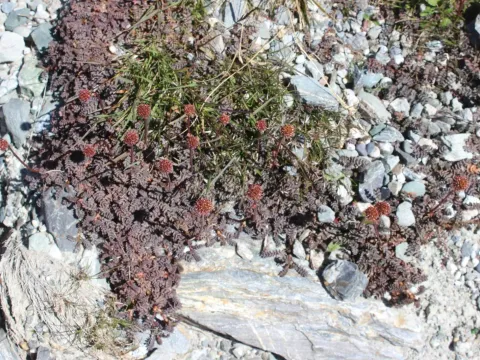
Acaena saccaticupula
Acaena saccaticupula
Acaena saccaticupula is a perennial evergreen groundcover belonging to the Rosaceae family. Native to the mountain ranges of New Zealand, this species has evolved to thrive in harsh, rocky environments, showcasing remarkable hardiness and resilience.
What the section contains
Acaena saccaticupula
The plant features trailing, woody stems that root at the nodes, creating a dense, carpet-like mat reaching only 5–10 cm in height. Its foliage is composed of small, pinnate leaves, often displaying a glaucous or greenish hue, which remains attractive throughout the growing season.
For successful cultivation, the plant requires a position in full sun to partial shade with well-draining soil. It is highly intolerant of waterlogged conditions, making effective soil drainage essential, especially in heavier or clay-based growing media.
Regarding climate requirements, this species prefers cool to moderate temperate conditions. While it is hardy in many climates, it benefits from a light organic or grit mulch in winter to protect its shallow root system from extreme fluctuations in temperature.
In terms of agricultural and horticultural use, Acaena saccaticupula is highly valued for its ability to stabilize soil on slopes and suppress weed growth. It is a staple choice for rock gardens, crevice plantings, and as a durable alternative to lawn grass in low-traffic ornamental areas.
The primary threats to Acaena saccaticupula include fungal pathogens, such as root rot, which are triggered by poor air circulation and excessive soil moisture. Proper planting depth and gravel top-dressing are effective management strategies to mitigate these risks.
Gastropods, particularly slugs and snails, pose a significant risk to the foliage during humid spring and autumn months. Horticulturalists often implement physical barriers or organic bait to protect the aesthetic integrity of the groundcover mats.
Aphids can occasionally infest the plant, especially during stressful periods of drought or high heat. Monitoring the undersides of leaves and utilizing insecticidal soaps or neem oil is recommended for effective population control when needed.
Soil compaction can lead to stunted growth and reduced vigor. Ensuring the soil remains friable and well-aerated is critical to maintaining the health and expansion rate of the colony over several years.
Finally, competition from aggressive perennial weeds during the establishment phase can hinder the plant's spread. Hand weeding is necessary until the Acaena mat matures and naturally shades out competing vegetation through its dense growth habit.