
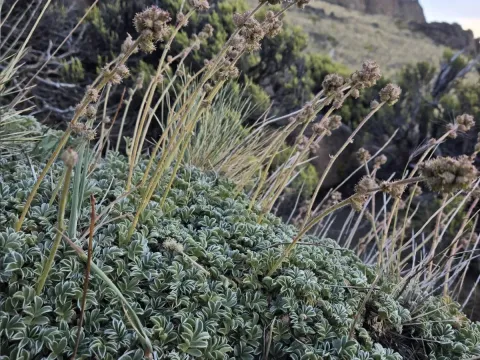
Acaena splendens
Acaena splendens
The propagation of Acaena splendens is most effectively achieved through vegetative methods, such as dividing established clumps during the early spring growth phase.
What the section contains
Acaena splendens
For seed propagation, cold stratification is essential; seeds should be placed in a chilled environment for several weeks before sowing in well-draining soil mixes.
Seedlings should be kept in a temperate greenhouse or a shaded area until they develop several sets of true leaves and show signs of active rooting.
When transplanting to the garden, it is important to provide sufficient space, as the creeping stems will root at the nodes and expand horizontally over time.
Optimal planting time is early spring, allowing the root system to become established before the onset of high summer temperatures or winter frosts.
Acaena splendens belongs to the Rosaceae family and is recognized for its dense, silvery-grey foliage, originating from the mountainous regions of South America.
This species thrives in sunny locations but benefits from protection against scorching afternoon sun, which can dehydrate the fine, delicate leaf structures.
The soil must be grit-rich, sandy, or stony to ensure excellent drainage, as the plant is highly susceptible to rot if left sitting in stagnant moisture.
In terms of maintenance, this perennial is relatively drought-tolerant once established, requiring only occasional deep watering during extreme heatwaves.
Fertilizer requirements are minimal; a light application of low-nitrogen compost in spring is generally sufficient to promote healthy, compact foliage development.
The primary concern for Acaena splendens is the development of fungal pathogens, particularly root rot, which is triggered by excessive soil moisture and poor drainage.
Good cultural hygiene, such as removing fallen leaves and debris from the base of the plant, significantly reduces the risk of fungal proliferation within the mat.
While relatively pest-resistant, spider mites can occasionally affect the plant during prolonged dry and hot periods, causing the leaves to lose their vibrant sheen.
If mite infestations occur, the application of neem oil or insecticidal soap is recommended as a safe and effective control method for delicate alpine plants.
Preventative measures, such as ensuring adequate airflow between neighboring plants, are the most effective way to avoid the need for chemical intervention in a rock garden setting.