
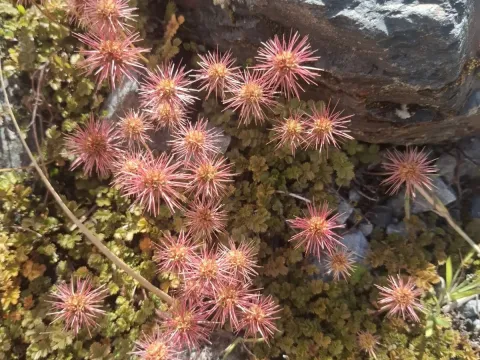
Acaena inermis
Acaena inermis
Acaena inermis is typically propagated through division of established clumps or by sowing seeds in early spring within controlled environments.
What the section contains
Acaena inermis
When starting from seeds, it is recommended to use seed trays filled with a well-draining substrate and keep them in a cool, bright greenhouse setting.
Division is the preferred method for home gardeners, best performed in spring, which encourages strong root development before the peak summer heat.
Young plants should be spaced at least 25 cm apart, allowing the creeping stems to cover the soil surface evenly over the first growing season.
Post-transplantation care must include consistent moisture to help the plant establish its root system in the new growing environment.
This species belongs to the family Rosaceae and is native to the diverse landscapes of New Zealand, known for its creeping habit and delicate foliage.
The plant thrives in full sun or light shade; however, consistent moisture is essential to prevent the foliage from scorching during intense heat.
Soil requirements are relatively specific: the site must be well-drained, as the roots are highly susceptible to rot if water accumulates for extended periods.
It prefers neutral to slightly acidic soil conditions and benefits from the addition of compost to improve soil structure and nutrient content.
Regarding climate, it is hardy in many temperate zones, although it benefits from protective mulch during winters with little snow cover and harsh frost.
Root rot is the most common threat to this plant, usually caused by poor drainage or heavy, waterlogged clay soils that inhibit aeration.
Slugs and snails are the primary pests that can cause significant aesthetic damage to the leaves, especially in damp and humid garden corners.
Fungal diseases, including powdery mildew, may affect the plant when air circulation is poor, particularly during hot and humid spells.
Management of these threats involves careful site selection, ensuring adequate spacing between plants to encourage better airflow.
For pest control, gardeners often use iron phosphate baits to mitigate slug damage without harming the overall garden ecosystem.