
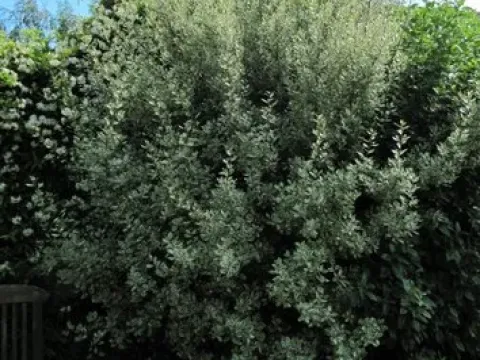
Smith's buckthorn
Rhamnus smithii
Smith's buckthorn (Rhamnus smithii) belongs to the Rhamnaceae family. It is a perennial deciduous shrub or small tree that exhibits a balanced growth habit suitable for various ecological restoration projects and garden landscapes.
What the section contains
Smith's buckthorn
Originating from the mountainous regions of North America, specifically parts of Colorado and New Mexico, this species thrives in riparian zones and canyon bottoms. It is highly adapted to high-altitude environments where it benefits from seasonal moisture availability.
Botanically, the plant is characterized by its elliptical, leathery leaves and small, inconspicuous flowers that bloom in the spring. The resulting fruit is a dark-colored drupe, which serves as a critical nutritional resource for local wildlife during the late summer and autumn months.
The culture requires well-draining, nutrient-rich soil to establish a robust root system. It prefers neutral to slightly alkaline pH levels and performs best when planted in areas that receive full to partial sunlight, depending on the intensity of the regional summer heat.
In terms of agricultural and landscape use, Rhamnus smithii is valued for its soil-binding properties. It is often planted to stabilize embankments and prevent erosion in naturalized or semi-cultivated environments where water management is a priority.
The primary threats to Smith's buckthorn include various soil-borne fungal pathogens, such as Phytophthora, which thrive in waterlogged soil conditions. Excessive irrigation without proper drainage is a leading cause of plant decline.
Pest pressures primarily involve aphids and mites that infest tender foliage during the active growing season. If left unchecked, these insects can cause premature leaf drop and reduce the overall aesthetic and physiological vigor of the shrub.
Wildlife damage, particularly from browsing deer or bark-gnawing rodents, poses a significant risk to young specimens. Implementing protective cages or tree wraps is recommended to ensure the plant survives the critical early years after installation.
Sanitation practices, such as the removal of dead wood and leaf litter, are essential to minimize the inoculum levels of common foliar diseases. Regular pruning also helps improve airflow, which is a key factor in inhibiting the growth of mold and mildew.
Timely monitoring and the application of integrated pest management (IPM) strategies are vital for maintaining healthy stands. Proper nutrition and avoiding over-fertilization help keep the plants resilient against environmental stressors and potential pest attacks.