
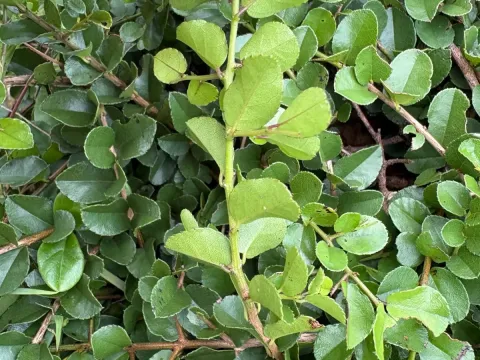
Sageretia thea
Sageretia thea
Sageretia thea is an evergreen shrub belonging to the Rhamnaceae family. Originating from the subtropical regions of China and Southeast Asia, this species is highly valued in horticulture for its compact growth habit and glossy foliage.
What the section contains
Sageretia thea
This plant thrives in bright, indirect light. While it can tolerate some morning sun, intense afternoon direct light must be avoided to prevent leaf scorching. In indoor settings, maintaining consistent light levels is crucial for foliage density.
Temperature requirements are moderate; the plant prefers a range between 18 and 25 degrees Celsius during the growing season. A cooler period during winter, ideally between 12 and 15 degrees, is beneficial to allow the plant to rest.
The soil structure must be well-draining and slightly acidic. A common substrate mix for this plant includes organic compost, pumice, and Akadama, which ensures proper aeration and prevents the roots from sitting in excessive moisture.
Regular pruning is an essential part of the agrotechnics for Sageretia thea. Because the plant responds well to styling, it is widely utilized in the art of bonsai to create complex structures through frequent pinching and branch wiring.
The primary pests affecting Sageretia thea include spider mites, scale insects, and mealybugs. These pests frequently attack the plant in dry environments with poor air circulation, making regular misting and inspection critical for control.
Root rot is the most common physiological issue caused by overwatering or poor drainage. Maintaining a balanced watering cycle and ensuring the substrate dries out slightly between applications is the best prevention against fungal infections.