
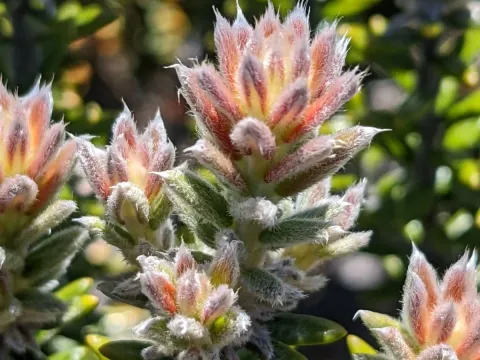
Shiny phylica
Phylica nitida
Shiny phylica (Phylica nitida) is an evergreen shrub belonging to the Rhamnaceae family. It is native to temperate, humid regions, where it thrives in specific island microclimates.
What the section contains
Shiny phylica
The plant requires well-draining, acidic soil types to maintain healthy root development. It is highly sensitive to waterlogging, necessitating a substrate that allows excess water to escape rapidly.
Optimal growth occurs in bright, filtered light. While it tolerates some direct sunlight, it should be protected from intense heat and drying winds which can scorch the foliage.
Agrotechnical management includes maintaining moderate soil moisture levels. During the active growing season, balanced, low-phosphorus fertilizer applications support the plant's health.
In terms of usage, the plant is valued primarily as an ornamental specimen in landscaping, often used in gardens or conservatories for its unique, glossy evergreen foliage.
Common pests affecting Phylica nitida include spider mites and scale insects, which often colonize the undersides of leaves and cause sap loss and yellowing.
Root rot is the most significant disease threat, typically caused by improper watering practices or heavy, compacted soil that holds moisture for too long.
To mitigate these risks, it is essential to ensure high air circulation around the plants and to practice strict sanitation by removing any dead or decaying plant matter.
Fungal infections, such as leaf spots, can be managed with copper-based fungicides if the climate remains persistently humid during the growing cycle.
Early detection and prompt application of appropriate horticultural treatments are vital to preventing total plant loss during an active pest infestation.