
Bruckenthalia
Bruckenthalia
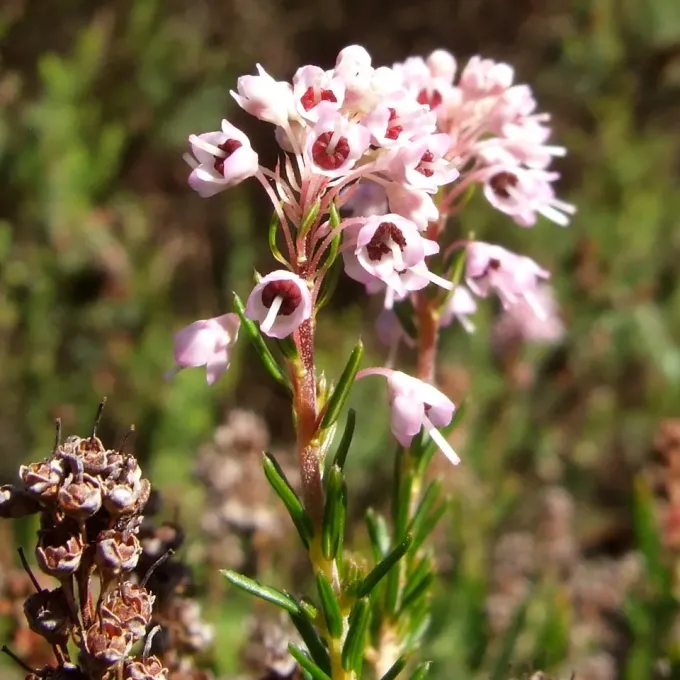
Description
Growing requirements
Bruckenthalia (Bruckenthalia spiculifolia) is a low-growing evergreen shrub belonging to the Ericaceae family. It is a monotypic genus, making it a unique botanical specimen for rock gardens and heath landscapes.
Native to the mountains of Southeastern Europe, this plant has adapted to rocky, well-drained habitats, exhibiting high resilience to wind and temperature fluctuations.
The primary soil requirement for Bruckenthalia is a low pH (acidic) environment. It thrives in well-drained, sandy, or peaty substrates that prevent any form of moisture stagnation around the root ball.
This shrub prefers full sun to light shade, where it can develop its characteristic spikes of delicate, bell-shaped pink flowers throughout the late spring and summer months.
Climate adaptability is a strong trait, as it is naturally suited for cool, temperate environments. In cultivation, it requires consistent but moderate moisture levels to ensure the foliage remains vibrant year-round.
Main diseases and pests
Root rot is the most significant threat to this culture, usually caused by poor drainage or overwatering in heavy, clay-rich soils that lack sufficient aeration.
Fungal leaf spot diseases can occur during periods of high humidity and poor ventilation. Maintaining adequate spacing between individual plants is essential to promote good airflow.
Spider mites are common pests that may infest the plant during hot, dry spells, often leading to discoloration and premature drop of the small, needle-like leaves.
If infestations are detected, insecticidal soap or specific miticides should be applied in the early morning to avoid burning the foliage under direct sunlight.
Pruning is recommended after the flowering period to maintain a dense shape and remove any dead or diseased stems, which helps mitigate the risk of pathogen buildup.