
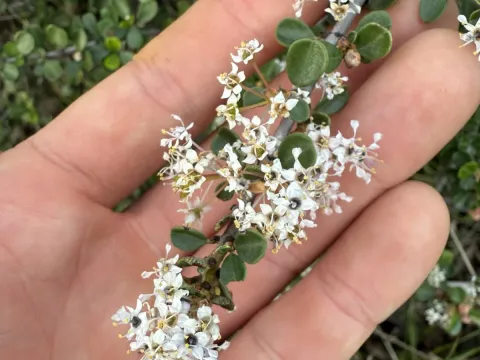
Wedgeleaf ceanothus
Ceanothus cuneatus
Wedgeleaf ceanothus (Ceanothus cuneatus) is a prominent evergreen shrub belonging to the Rhamnaceae family. Native to the chaparral ecosystems of North America, particularly in California, it is highly valued for its natural adaptation to semi-arid climates and rocky terrains.
What the section contains
Wedgeleaf ceanothus
The plant features distinct wedge-shaped, leathery leaves covered in a waxy cuticle, which acts as a defense mechanism against transpiration during hot summer months. Its flowers, usually appearing in clusters, offer a palette ranging from white to pale blue, emitting a pleasant scent that is highly attractive to native pollinators.
Agronomically, this species thrives in well-drained, sandy, or rocky soils with low fertility. It is exceptionally sensitive to waterlogged conditions, which can quickly lead to root decay, so selecting sites with excellent soil drainage is a fundamental requirement for successful establishment.
The culture requires full sun exposure to maintain its dense, bushy architecture. Partial shade often results in leggy growth and reduced flowering potential. While it can withstand moderate frost, it prefers regions where the winter cycle is not characterized by excessive humidity.
In terms of practical application, wedgeleaf ceanothus is an excellent choice for erosion control on slopes and for xeriscaping. Beyond its aesthetic appeal, it serves as a critical habitat plant, supporting biodiversity by providing shelter and nectar for various insect species.
The most significant threats to Ceanothus cuneatus are fungal pathogens, particularly those causing root and crown rot, such as Phytophthora species. These diseases are almost exclusively linked to poor soil management, specifically excess moisture around the root zone.
Insect pests, including aphids and various scales, can colonize the foliage and tender stems. While an established plant can often tolerate minor infestations, heavy pressure can weaken the shrub, making it susceptible to secondary bacterial or fungal infections.
Maintenance of plant health starts with proper spacing to ensure adequate air circulation. This practice significantly reduces the risk of powdery mildew and other foliar diseases that thrive in stagnant, humid environments within the shrub's canopy.
Integrated pest management (IPM) is recommended, focusing on early detection. If chemical intervention is necessary, targeted systemic insecticides should be applied carefully to minimize impact on beneficial pollinators, such as bees, which frequently visit the flowers.
Sanitation is equally vital; removing dead or diseased wood during the dormant season prevents the accumulation of inoculum. Healthy, stress-free plants grown in their preferred environment are remarkably resistant to most common diseases and pests found in North American gardens.