
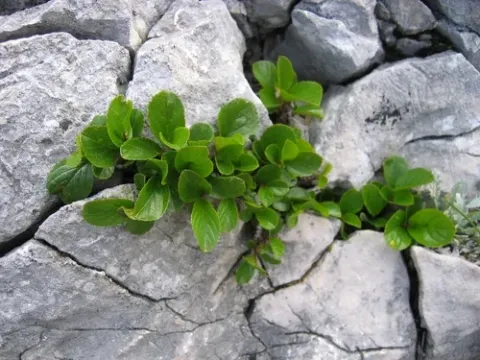
Dwarf buckthorn
Rhamnus pumila
Dwarf buckthorn (Rhamnus pumila) is a prostrate deciduous shrub belonging to the Rhamnaceae family. It is recognized for its compact size, making it an ideal choice for rock gardens and alpine installations.
What the section contains
Dwarf buckthorn
The species originates from the mountainous regions of Southern and Central Europe. It has evolved to thrive in harsh environments, often found growing directly from rocky crevices and limestone soils.
Successful cultivation requires soil with excellent drainage properties. While it is not highly demanding regarding fertility, it prefers slightly alkaline substrates that mimic its natural alpine habitat.
The plant thrives in full sun exposure, which encourages the development of its dense, low-growing form. In shade, the plant tends to stretch and lose its characteristic aesthetic appeal.
Maintenance is minimal, consisting mainly of occasional watering during extreme drought and the application of gravel mulch to keep the root crown dry and well-aerated.
Dwarf buckthorn is generally a hardy species with few significant biological threats in its preferred outdoor environments.
However, the plant can be susceptible to root rot if water management is poor and the soil remains persistently saturated.
In terms of pests, spider mites can occasionally affect the foliage, particularly during hot and dry summer spells.
Regular monitoring of the foliage helps detect early signs of pest activity before they cause structural damage to the shrub.
If necessary, appropriate acaricides or systemic fungicides can be applied, though the plant is best managed through optimal environmental control.