
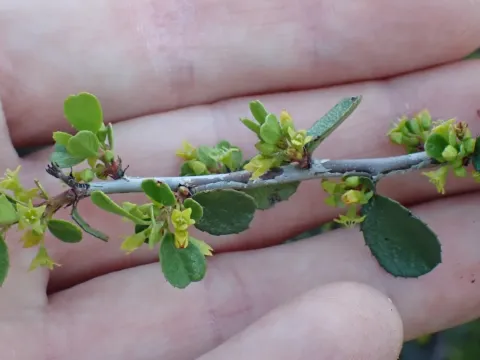
Hollyleaf buckthorn
Rhamnus crocea
Hollyleaf buckthorn, known botanically as Rhamnus crocea, is a prominent member of the Rhamnaceae family. This evergreen shrub is native to the chaparral and woodland regions of California and Arizona, thriving in rugged landscapes.
What the section contains
Hollyleaf buckthorn
The plant is highly drought-tolerant, making it an excellent candidate for xeriscaping. It prefers rocky or sandy, well-draining soils and performs best in full sun or light filtered shade. Its ability to tolerate low-nutrient soils is a key evolutionary advantage.
Morphologically, Rhamnus crocea is characterized by its stiff, spiny branches and small, leathery, serrated leaves that have a distinct reddish-bronze or yellow-green hue, often resembling holly foliage.
In terms of human use, this species is highly valued in environmental restoration and native plant gardening. It serves as an essential food source for birds and pollinators, while its dense structure provides vital nesting habitats for local wildlife.
Agronomically, the shrub requires minimal intervention once established. The most critical factor for success is ensuring zero water accumulation around the crown, as moisture stress is the primary cause of failure in cultivated environments.
The most significant threat to the health of Rhamnus crocea is improper soil drainage leading to Phytophthora root rot. When planted in heavy clay soils or over-irrigated, the plant becomes highly susceptible to fungal pathogens.
Pest issues are generally minor and infrequent. Occasional infestations of aphids or scale insects may occur, but they rarely impact the plant's structural integrity if the environment mimics the shrub's natural, arid habitat.