
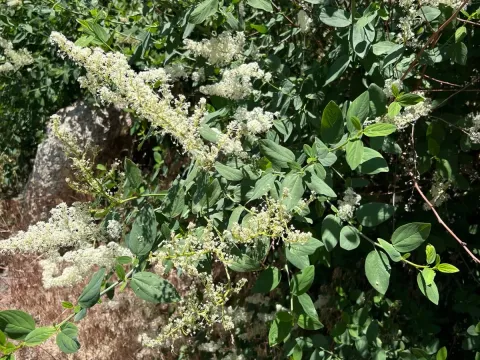
Deerbrush
Ceanothus integerrimus
The seeds of Ceanothus integerrimus require stratification to overcome dormancy. Sowing should be carried out in late autumn or early spring in a well-draining seed-starting mix.
What the section contains
Deerbrush
Scarification of the seeds is highly recommended, as they possess a tough seed coat that naturally prevents immediate germination in unfavorable conditions.
Once seedlings reach a manageable size, they should be transplanted into individual pots before moving them to their permanent garden location in the spring.
Propagation via semi-hardwood cuttings during the summer months is an alternative method. Treated with rooting hormones, these cuttings usually establish well in a controlled greenhouse environment.
Ensuring the correct spacing between plants is crucial to avoid overcrowding, which helps maintain good air circulation and promotes healthy structural growth.
Ceanothus integerrimus, commonly known as Deerbrush, belongs to the Rhamnaceae family. It is a native species of the Western United States, adapted to mountainous slopes and open woodlands.
The plant thrives in full sun and requires well-drained, slightly acidic to neutral soil. Poor drainage is the most common cause of failure in cultivating this species.
While drought-tolerant once established, young plants benefit from regular watering during the first growing season to encourage deep root development.
This species prefers mild climates and requires protection from extreme winter frosts. In colder regions, a thick layer of organic mulch around the base is essential to protect the root system.
Low maintenance is a key feature of this shrub; however, light pruning after flowering helps maintain a compact shape and promotes more vigorous blooms in the following season.
Root rot, primarily caused by Phytophthora species, remains the most significant threat to the health of the plant, especially in heavy or waterlogged soil types.
Aphids and spider mites are frequent pests that infest the tender new growth during the spring and summer months, often leading to leaf yellowing and reduced vigor.
Powdery mildew can occur in areas with high humidity and stagnant air. Keeping the plant properly pruned to allow air flow is the best preventative measure.
Nutrient deficiencies, particularly iron chlorosis, can manifest in alkaline soils, leading to pale foliage and stunted growth patterns over time.
Integrated pest management strategies should be employed, focusing on cultural practices such as proper watering and sanitation before resorting to chemical interventions.