
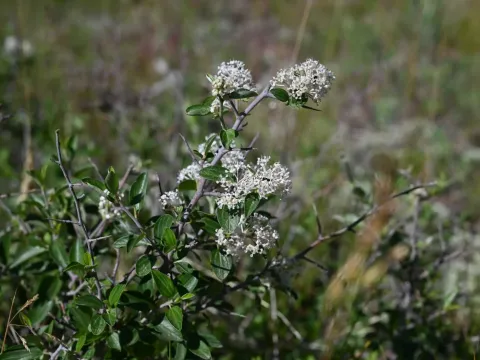
Fendler's Ceanothus
Ceanothus fendleri
Fendler's Ceanothus (Ceanothus fendleri) is a low-growing, spreading shrub belonging to the Rhamnaceae family. Native to the mountainous regions of the Southwestern United States, it is well-adapted to high-altitude, dry environments.
What the section contains
Fendler's Ceanothus
The plant thrives in well-drained, rocky, or sandy soils and is highly valued for its exceptional drought tolerance. It is specifically adapted to sites where typical garden shrubs struggle due to lack of moisture or poor nutrient content in the soil.
Botanically, it features small, leathery leaves and a dense habit, often forming mats that protect the soil surface. The white to pale-blue flowers emerge in late spring or summer, providing a significant nectar source for local pollinator species.
Cultivation requirements involve full sun exposure and minimal fertilization. Once established, this shrub rarely requires supplementary watering, making it an ideal candidate for xeriscaping and sustainable landscape design.
Its primary use is for slope stabilization and rock gardens, where its compact size and rugged nature are most beneficial. It is often preferred for naturalizing areas that mimic its original ecological niche.
The most significant threat to the health of this species is root rot, caused by poor drainage or excessive irrigation. Ensuring a steep planting site or a substantial gravel drainage layer is essential for long-term viability.
Powdery mildew can occasionally affect foliage during periods of high humidity or stagnant air circulation. Pruning for better air movement and selecting exposed sites significantly reduces the incidence of this fungal issue.
Pests like aphids or mites may colonize the tender new growth during hot, dry summer months. Monitoring and targeted botanical soaps are generally sufficient to manage these populations without harming the plant.
Deer and other herbivores typically avoid the plant due to its leathery texture and thorns, which provides a natural advantage in wildland restoration. However, protection may be needed for very young seedlings.
Winter survival is high, but extreme freeze-thaw cycles on waterlogged soil can lead to plant death. Maintaining a dry crown area throughout the dormant season is a key cultural practice for professional growers.