
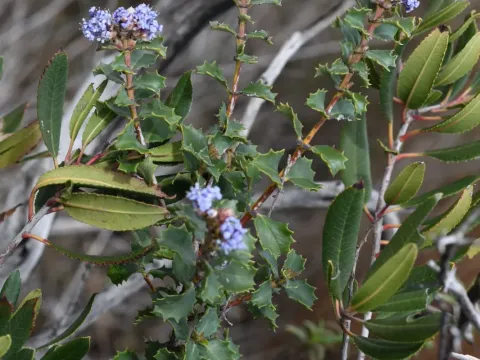
Hollyleaf ceanothus
Ceanothus purpureus
Hollyleaf ceanothus (Ceanothus purpureus) is an evergreen shrub belonging to the Rhamnaceae family. Native to California, this plant is well-known for its distinctive purple flowers and leathery, holly-like foliage, which provides year-round aesthetic appeal in Mediterranean-type climates.
What the section contains
Hollyleaf ceanothus
The plant thrives in well-draining soils and is particularly sensitive to waterlogged conditions. It is essential to ensure that the site provides excellent soil aeration to prevent root rot, which is the most common cause of plant failure in non-native environments.
Hollyleaf ceanothus requires full sun exposure to maintain its compact form and promote abundant flowering. It is relatively drought-tolerant once established, requiring minimal irrigation during the summer months, but it must be protected from extreme, prolonged freezing temperatures.
Agronomic management includes light pruning after the flowering season to encourage dense growth and maintain the desired shape. Fertilization should be kept to a minimum, as high nitrogen levels can lead to weak, rapid growth that is susceptible to environmental stress.
The species serves as a valuable nectar source for native pollinators, making it an excellent choice for ecological gardening. Proper site selection is the most critical factor in the successful cultivation of this shrub, as it dislikes being moved once established in its permanent location.
Root rot caused by Phytophthora species is the primary threat to Ceanothus purpureus. This pathogen is especially prevalent in heavy soils with poor drainage, necessitating careful site selection and the use of raised beds if necessary.
Pests such as scale insects and aphids can occasionally infest the foliage, particularly in overcrowded or stressed plantings. Integrated pest management, focusing on biological controls and manual removal, is preferred over the widespread use of chemical pesticides.
Powdery mildew may occur in regions with high humidity or poor air circulation. Improving airflow through selective pruning and avoiding overhead irrigation are effective strategies for mitigating the impact of fungal diseases on the plant's overall health.
Maintaining a clean cultivation environment, including the removal of dead leaf litter beneath the canopy, helps reduce the reservoir of potential pathogens. It is also important to ensure that any pruning cuts are made cleanly to allow for rapid healing of the tissue.
Monitoring the plant for signs of nutrient deficiency or water stress is essential, as weakened shrubs are significantly more vulnerable to both pests and diseases. Providing consistent, moderate care is the best strategy for ensuring the long-term vigor of the shrubs.