
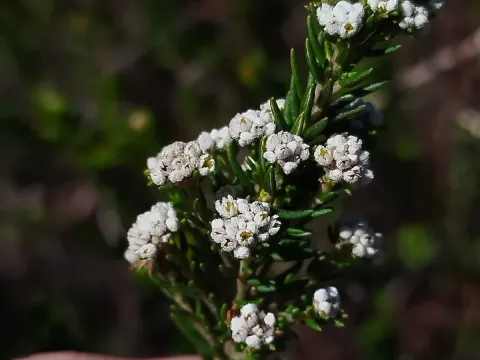
Phylica ericoides
Phylica ericoides
Seeds of Phylica ericoides are typically sown during the spring season to capitalize on increasing light intensity, which is essential for healthy seedling development.
What the section contains
Phylica ericoides
It is recommended to use a seed tray filled with a high-quality, well-draining substrate composed primarily of horticultural sand and fine-grade peat moss.
Seeds may require a period of stratification to break dormancy; placing them in a cool environment for several weeks before sowing can significantly improve germination rates.
Maintain a stable temperature range between 18 and 22 degrees Celsius, and ensure that the growing medium remains consistently moist but never waterlogged during this stage.
Once seedlings have reached a manageable size, they should be carefully pricked out into individual pots to allow for adequate root expansion and air circulation.
As a native of South Africa, Phylica ericoides thrives in regions with a Mediterranean-like climate, requiring plenty of sunlight to maintain its dense, heath-like growth form.
The plant strictly requires acidic to neutral soil that is exceptionally porous; avoid heavy clay soils that retain excess water and promote root rot.
Proper air circulation is crucial for this species; stagnant air in the growing environment can quickly lead to fungal infections on the delicate foliage.
Watering should be approached with caution, utilizing soft, filtered water to prevent the accumulation of mineral salts that could adversely affect the plant's health.
In colder climates, this plant must be treated as a container specimen, moved indoors to a bright, frost-free location before the onset of winter temperatures.
In the professional flower industry, Phylica ericoides is highly valued as a filler crop, producing long, decorative stems that add texture to complex floral arrangements.
The harvest yield is largely dependent on the frequency of pruning, which encourages the plant to produce a higher volume of harvestable, woody side shoots.
Stems are typically ready for harvest once they reach the desired length and the needles are fully developed, ensuring long vase life for the final product.
Yield stability can be achieved by establishing a rotational planting system, allowing growers to consistently provide fresh material to the market year-round.
Mature bushes exhibit robust growth and can be harvested repeatedly over several seasons, provided the plant's structural integrity is maintained through careful harvesting practices.
Root rot is the most significant threat to the survival of Phylica ericoides, usually occurring as a result of poor soil drainage or excessive watering practices.
Aphids are common pests that tend to cluster on the tender tips of new growth, stunting development and detracting from the aesthetic value of the stems.
Spider mites can become problematic in low-humidity environments, necessitating regular monitoring and, if required, the application of appropriate biological controls.
Nutrient deficiencies, particularly regarding trace elements, may manifest as yellowing of the foliage, often corrected by adjusting the pH level of the growing medium.
Integrated pest management strategies, such as biological control and habitat modification, are preferred to chemical intervention to protect the quality of the cut greens.