
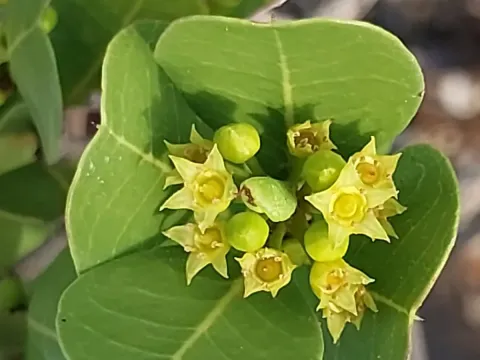
Reynosia
Reynosia
Reynosia is a genus of evergreen shrubs and small trees belonging to the Rhamnaceae family. Native to tropical and subtropical regions of the Americas, particularly the Caribbean and Florida, these plants are known for their resilience in challenging environments.
What the section contains

Reynosia
The plant thrives in well-drained calcareous or sandy soils. One of its most notable characteristics is its high salt tolerance, making it an excellent choice for coastal landscaping and agricultural projects in regions exposed to sea spray.
Full sun exposure is crucial for the optimal development of Reynosia. It does not perform well in shady areas, which can lead to stunted growth and reduced fruit production, emphasizing the need for open planting sites.
Climate-wise, Reynosia requires warm conditions. It is sensitive to severe frost, which restricts its cultivation to tropical and subtropical zones where temperatures remain consistently above freezing throughout the growing season.
Proper agricultural management involves periodic pruning to shape the canopy and remove dead wood. While it is a slow-growing plant, maintaining healthy soil nutrient levels is essential, especially in rocky or coral-based substrates typical of its natural habitat.
Reynosia is primarily cultivated for its edible fruits, which are small drupes that change from green to dark purple or black upon ripening. The harvest is typically conducted by hand, focusing on individual fruit maturity.
The flavor profile of the fruit is sweet and pleasant, often compared to berries or cherries. While not a large-scale commercial commodity, it remains an important supplementary fruit crop in various local food systems across its range.
Beyond human consumption, the fruit is a valuable resource for local wildlife, particularly birds, which helps in the natural dispersion of the plant. This makes Reynosia a beneficial species for ecological restoration projects.
The wood of Reynosia is known for its extreme density and durability. Historically, it has been used for crafting high-quality tool handles and small furniture items, adding value beyond just food production.
As sustainable agriculture grows, Reynosia is being re-evaluated for its potential in drought-prone areas. Its ability to provide fruit with minimal inputs makes it a candidate for low-intensity orchard development.
Due to the phytochemical profile of its foliage and bark, Reynosia is naturally resistant to many common pests. However, it is not entirely immune to environmental stressors that can invite opportunistic attacks.
Fungal diseases are the primary threat, especially in humid conditions or poorly drained soil. If the soil remains saturated for long periods, the roots become vulnerable to decay, which is the most common cause of plant failure.
- Monitor for scale insects and mealybugs, which may occasionally appear on new growth.
- Improve soil drainage to prevent the development of root-rotting fungi.
- Conduct regular canopy thinning to increase airflow and reduce fungal habitat.
- Avoid over-fertilization, which can encourage soft, succulent growth attractive to pests.
- Implement an integrated pest management approach if minor outbreaks occur.