
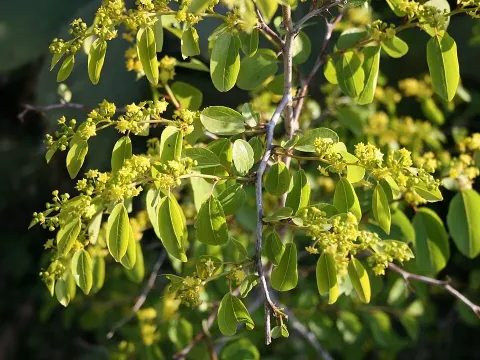
Paliurus
Paliurus
Paliurus, belonging to the Rhamnaceae family, is a deciduous shrub known for its resilience and sharp thorns. Often referred to as "Christ's thorn," it is native to the Mediterranean region, the Balkans, and parts of Asia.
What the section contains


Paliurus
This plant thrives in sunny, open locations and is highly tolerant of drought and poor, rocky soils. It is particularly well-suited for arid climates where irrigation is limited, making it an excellent candidate for erosion control.
Soil requirements for Paliurus include good drainage and alkalinity. It does not tolerate heavy clay or waterlogged soils, which can cause significant stress to its root system and stunt its development.
Cultivation practices involve spacing plants adequately to allow for lateral growth. In agricultural settings, Paliurus is often managed as a natural barrier due to its dense, impenetrable branches and sharp spines.
The economic value of Paliurus lies in its role as a high-quality honey plant and a source of pharmaceutical components. Its fruit and foliage are rich in flavonoids, which are processed for various medical and cosmetic formulations.
Paliurus is generally resistant to many pests, yet it is susceptible to powdery mildew under conditions of high humidity and poor air circulation. Proper spacing is the best preventive strategy.
Aphid infestations can occur on young, tender shoots during the spring. Monitoring is essential to ensure that the plants do not lose vitality due to sap-sucking pests during the primary growth phase.
Root rot remains the most serious threat, typically resulting from improper site selection where water accumulates. Always ensure the planting site is elevated or has improved drainage structures.
While the plant is hardy, physical damage to the branches can lead to fungal entry points. Clean cutting tools are mandatory during the pruning process to prevent cross-contamination between plants.
In some regions, borers may target aging or stressed shrubs. Maintaining overall plant vigor through occasional mulching and light fertilization helps the shrub build natural defenses against wood-boring insects.