
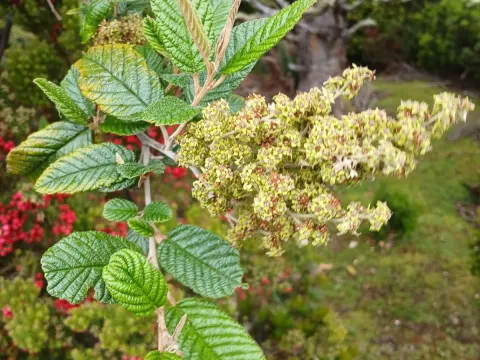
Pomaderris
Pomaderris
Pomaderris belongs to the Rhamnaceae family and is a genus of evergreen shrubs or small trees comprising about 70 species. Most representatives of this genus are endemic to Australia and New Zealand, where they have adapted to various environments ranging from coastal dunes to mountain forests.
What the section contains


Pomaderris
For successful cultivation, plants require well-drained, slightly acidic or neutral soil. A key requirement is the absence of waterlogging in the root zone, as most species are highly sensitive to excessive moisture, which can lead to the development of fungal diseases.
These crops prefer sunny locations or partial shade, protected from strong cold winds. In temperate regions, the plant requires shelter or cultivation in winter gardens, as most species are not sufficiently frost-hardy for open ground throughout the winter.
The agrotechnics of Pomaderris include regular watering during the active growing season and moderate pruning after flowering to maintain a compact crown shape. Propagation is most often carried out by shoot cuttings during the summer using rooting hormones.
The economic use of Pomaderris is primarily focused on ornamental gardening. Plants are valued for their abundance of small yellow or cream flowers gathered in inflorescences, which cover the stems during the spring flowering season, creating a spectacular visual highlight in landscaping.
The main threats to the health of Pomaderris are root rots caused by improper irrigation and poor substrate drainage. Root damage leads to gradual wilting of the leaves and the dieback of shoots.
Pests that frequently infest this species include spider mites and mealybugs. These insects settle on the underside of the leaves, sucking sap and inhibiting the overall development of the plant, which requires the application of systemic insecticides.
In high humidity, powdery mildew may appear on young leaf blades. Prevention consists of ensuring high-quality aeration of the bush and maintaining appropriate spacing between plants when planted in groups.
Nutrient deficiency manifests as leaf chlorosis. Correcting the situation is achieved by applying complex mineral fertilizers containing micronutrients, especially iron and magnesium, which are essential for full photosynthesis.
It is important to regularly inspect the plant for damaged branches, as secondary infections easily penetrate through mechanical wounds. Timely sanitary pruning significantly increases the plant's immunity and longevity.