
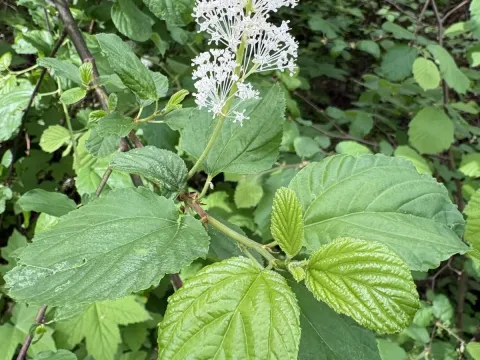
Redstem Ceanothus
Ceanothus sanguineus
Seeds of Ceanothus sanguineus require cold stratification, so planting in the fall allows them to experience winter conditions naturally before germination.
What the section contains
Redstem Ceanothus
Treatment with smoke or hot water soaking is a standard agronomic practice to break dormancy in seeds, significantly increasing the germination rate.
Transplanting seedlings should be performed in early spring, ensuring the plant has enough time to establish its taproot system before the peak heat of summer.
Proper spacing is essential to prevent overcrowding, as this species develops a broad, shrubby habit that requires good air circulation.
Early-stage irrigation is critical for newly planted specimens to ensure survival during the first year of growth.
Redstem Ceanothus thrives in full sun, which is necessary for producing the dense, attractive flower clusters that define this shrub.
Well-draining soil is mandatory; this species is highly susceptible to root rot if the soil remains waterlogged or heavy for extended periods.
This shrub is known for its nitrogen-fixing capabilities through symbiotic relationships with Frankia bacteria, allowing it to thrive in poor soils.
The plant is relatively drought-tolerant once established, requiring little to no supplemental water in many temperate climate zones.
Soil pH should ideally be neutral to slightly acidic, and avoid excessive mulching that retains too much moisture against the trunk.
The primary economic and ecological value of Ceanothus sanguineus lies in its role as a high-quality nectar source for bees and butterflies.
It serves as an excellent plant for erosion control on slopes and hillsides due to its extensive and sturdy root system.
The shrub provides critical habitat and food resources in the form of seeds for various bird species and small mammals.
In landscaping, it is used for naturalistic planting schemes and low-maintenance hedges, providing seasonal interest with its red stems and blooms.
Its ability to improve soil nitrogen levels makes it a valuable species for restoration projects and land reclamation efforts.
Root rot, primarily caused by Phytophthora species in poorly drained soils, remains the most significant threat to the plant's health.
Aphids can infest new growth during the spring, which may lead to curling leaves and localized damage to the shrub.
Powdery mildew is a common foliage issue in humid environments, particularly if the plant density prevents adequate drying of the leaves.
Scale insects can occasionally affect the older branches, potentially weakening the shrub if an infestation becomes heavy.
Regular monitoring and selective pruning of dead or diseased wood are the best preventative measures to maintain a robust and healthy specimen.