
Pallas buckthorn
Rhamnus pallasii
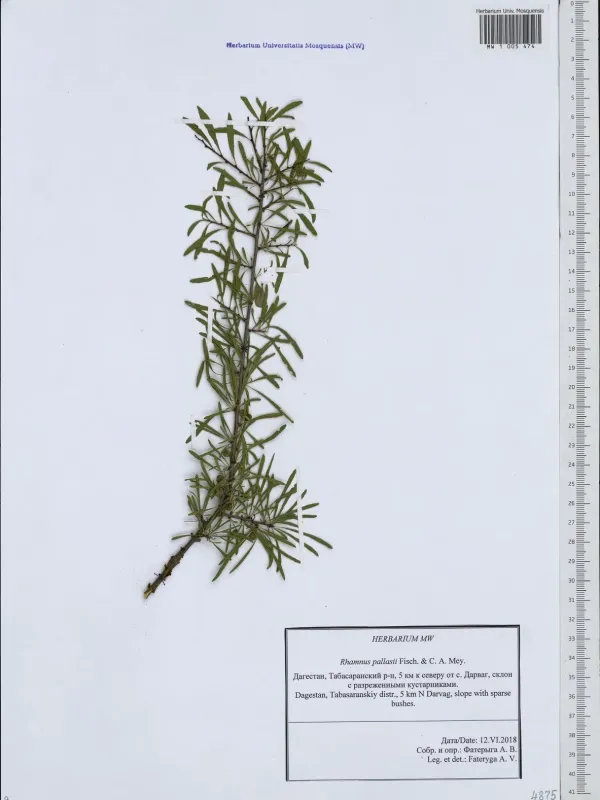
Description
Growing requirements
Pallas buckthorn (Rhamnus pallasii) is a deciduous shrub belonging to the Rhamnaceae family. It is naturally adapted to rocky and arid habitats found across Central Asia and the Caucasus.
The species thrives in harsh environmental conditions, demonstrating high resistance to extreme temperatures and moisture scarcity. Its biological features include a deep root system designed for nutrient extraction in poor soils.
For optimal growth, the plant requires full sun exposure and excellent soil drainage. It is highly suitable for reclamation projects on stony, calcareous, or degraded lands where other crops fail.
The shrub demonstrates a slow to moderate growth rate and is prized for its structural integrity. It does not require intensive irrigation once established, making it a sustainable choice for xeriscaping.
Climatic requirements are broad, as the species is native to regions with significant seasonal temperature fluctuations, confirming its reliability as a perennial crop in continental climates.
Main diseases and pests
Pallas buckthorn is generally hardy and resistant to most common plant diseases. However, waterlogged soils create favorable conditions for various root rot fungi.
Pests such as aphids and leaf-eating beetles may occasionally infest young shoots, particularly during a wet spring. Early monitoring and integrated pest management are recommended.
Powdery mildew can occur in stagnant air conditions. Ensuring good ventilation through correct plant spacing and periodic pruning helps maintain a healthy canopy.
Winter damage is rare for this species, but young specimens may suffer from extreme frost combined with wind if not protected in the nursery stage.
The key to successful cultivation is selecting a site with proper drainage and preventing excessive nitrogen fertilization, which can attract pests and weaken the plant structure.
Harvesting
The primary economic use of Rhamnus pallasii lies in its pharmacological value. The fruits are harvested for the production of herbal laxative preparations.
Harvesting should be performed only when the berries have reached full maturity, marked by a deep black color. Mechanized harvesting is difficult due to the shrub's prickly branches, so manual labor is preferred.
Post-harvest processing involves immediate drying to prevent spoilage and ensure the stability of the active phytochemical compounds contained within the fruit skin and pulp.
Apart from its medicinal use, Pallas buckthorn is used as a functional plant for erosion control on slopes, helping to stabilize soil through its extensive and aggressive root network.
In decorative horticulture, it is appreciated for its hardiness and the visual appeal of its dark, glossy berries in autumn, providing a natural aesthetic to wild-style garden landscapes.