
Monterey ceanothus
Ceanothus rigidus
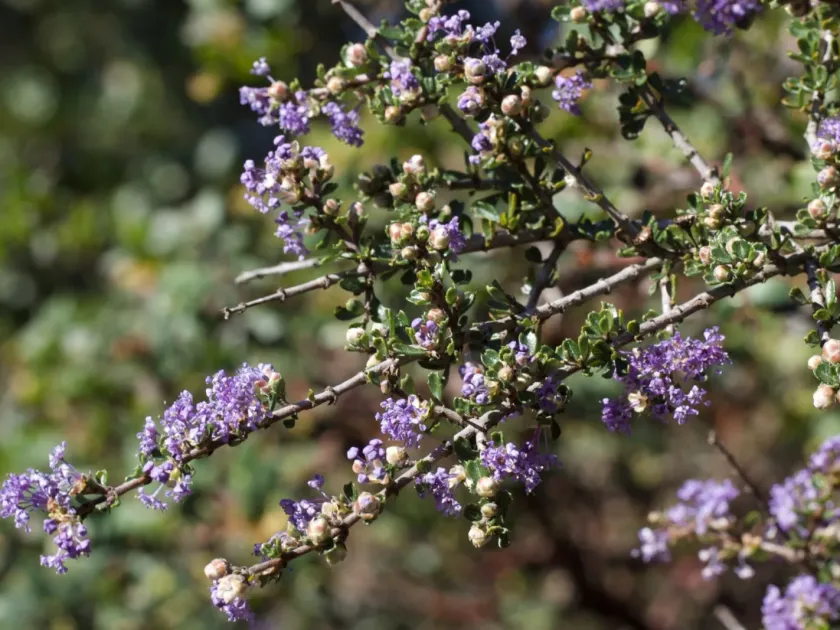
Description
Growing requirements
Monterey ceanothus (Ceanothus rigidus) is an evergreen shrub belonging to the Rhamnaceae family. It is native to the coastal ranges of California, where it thrives in rugged, well-drained chaparral ecosystems.
The plant requires full sun exposure to maintain its compact growth habit and produce abundant flowering. It is best adapted to sandy or rocky soils that provide excellent aeration and natural drainage, as it is highly intolerant of waterlogged conditions.
Regarding climate, this species prefers mild winters and dry summers. While it can withstand moderate drought once established, it needs consistent moisture during the first year of growth to develop a healthy root system.
Cultural management involves minimal pruning, typically performed immediately after the flowering season to shape the shrub. Heavy fertilization should be avoided, as it leads to excessive foliage growth and weakens the woody structure of the plant.
Economically, it is used primarily in landscaping, specifically for drought-tolerant gardens and erosion control on slopes. Its dense, dark green foliage and intense blue floral displays make it a highly sought-after ornamental plant.
Main diseases and pests
The primary threats to this species are root pathogens such as Phytophthora, often triggered by summer irrigation in humid climates. Ensuring high soil permeability is the most effective preventative measure against these diseases.
Common insect pests include scale insects and spider mites, which can cause leaf yellowing and reduced vigor. Integrated pest management strategies, including the use of horticultural oils, are recommended for effective control.